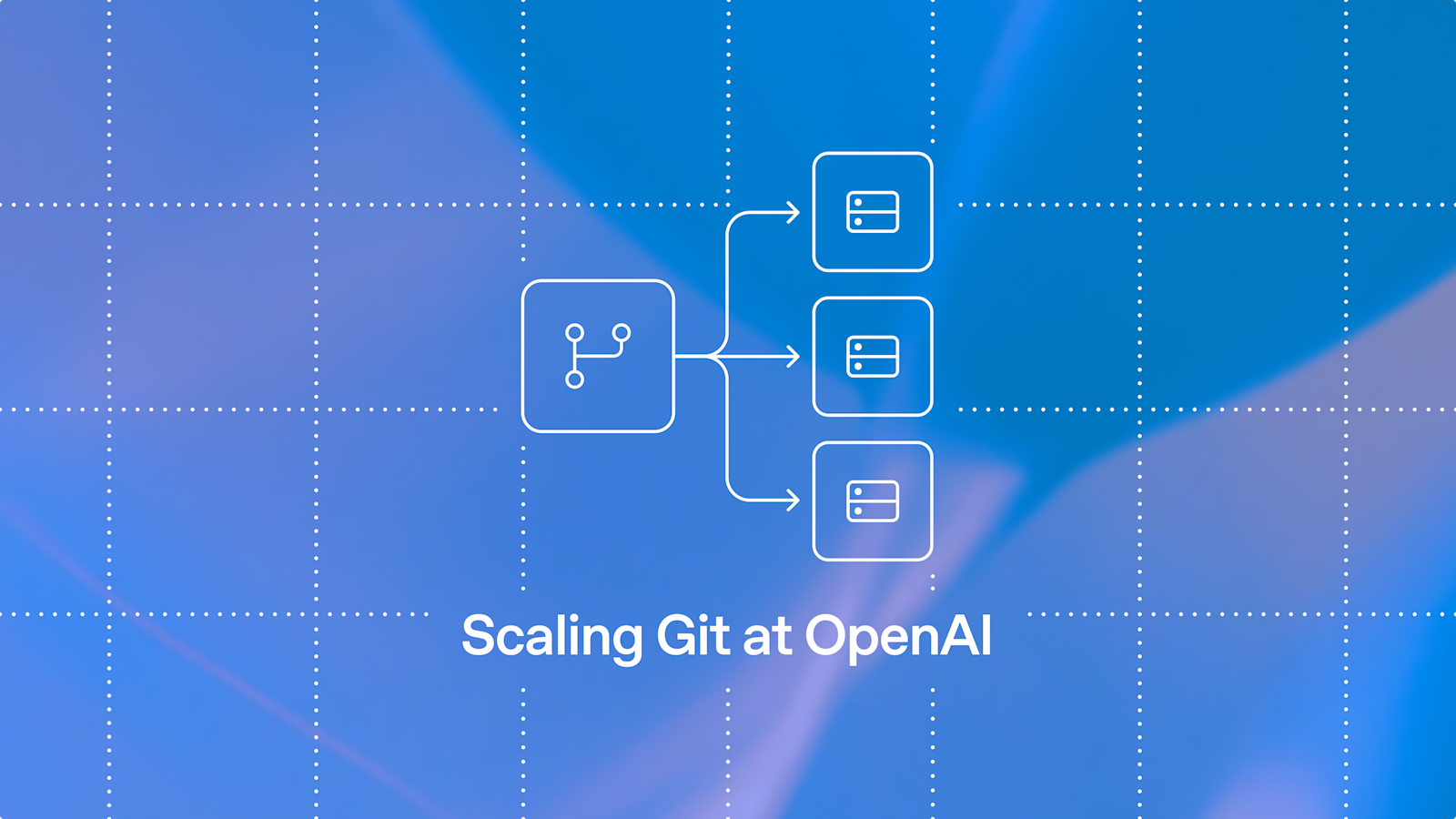
AI coding agents can write and revise code at a pace that traditional development workflows were never designed to handle. OpenAI says that pressure has led it to build Pando, a new backend for its internal Git service that keeps familiar Git tools working while changing how repositories are stored and served behind the scenes.
In a technical account published on 2 November, the company said Pando has cut median push latency by nearly fivefold. Its systems now process almost a petabyte of Git data each day. Those are OpenAI’s own measurements, rather than independent benchmarks, but they illustrate the scale of the infrastructure problem that accompanies automated software development.
Git remains the everyday system developers use to track changes, create branches and collaborate on software. At OpenAI, however, many coding agents may be working on related code at once. Each agent can fetch a repository, make changes and push a branch. As that activity grows, a central service must handle more concurrent requests without making human developers wait.
Pando does not ask developers to abandon the Git client or learn a new version-control language. OpenAI says it preserves the Git protocol while replacing the server-side storage and coordination layer. That distinction matters because a tool that changes developers’ daily commands would be much harder to deploy across a large organisation.
One change lets pushes to separate branches proceed concurrently, instead of forcing unrelated work through the same bottleneck. Another makes better use of reusable packfiles when serving fetches. OpenAI also describes a trade-off in consistency across branches, which means the engineering gains are not free of complexity. The company has presented Pando as an internal system and has not announced it as a generally available product.
The story is not simply that Git has become slow. It is that AI agents multiply the number of code changes, branches and checks a development organisation has to absorb. Faster generation is only useful if review, testing, storage and deployment can keep pace. OpenAI has already expanded Codex’s cloud environments across devices, making the infrastructure behind that work more important.
OpenAI says some improvements from the project have been contributed upstream to Git, while it is exploring whether more can be shared. For other companies, Pando is a glimpse of a possible next bottleneck. When agents generate code continuously, the systems that organise and verify that code become as strategically important as the models themselves.
Related Reading
More contextual TechBooky stories selected from tags, categories and article context.
Paul Femi Balo is the founder and publisher of TechBooky. He covers artificial intelligence, African technology, digital infrastructure, enterprise technology and the global digital economy.
We use cookies to ensure that we give you the best experience on our website. If you continue to use this site we will assume that you are happy with it.