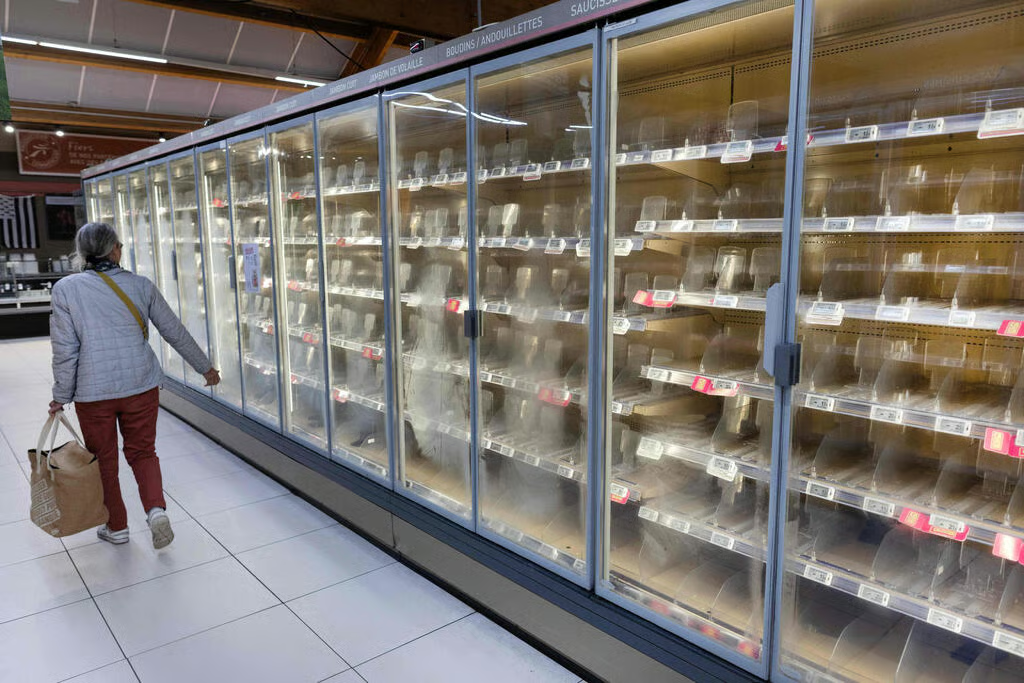
Refrigeration failures at supermarkets in several European countries on Monday have forced shops to discard chilled and frozen food, renewing concern that the cyberattack which disrupted French stores last month may not have been an isolated warning. Retailers in Belgium, Luxembourg and Sweden reported sudden temperature rises, while separate incidents were reported in Estonia and Ireland. Investigators have not established that every case has the same cause or attacker.
The disruption is unusually tangible for a cyber story. When a connected refrigeration controller is altered, a supermarket may lose stock before customers notice anything wrong with its website or payment terminals. A chilled aisle can be closed even while the rest of a store remains open.
In Belgium, Carrefour said a cyberattack targeting refrigeration equipment had a limited effect on 15 of its more than 700 stores, according to Associated Press reporting. Delhaize described an IT incident affecting refrigeration systems at several dozen stores, mostly in Belgium and some in Luxembourg. It said fresh and frozen ranges were temporarily reduced in affected shops, while distribution centres and deliveries continued to operate.
Sweden’s ICA said a limited number of stores were affected overnight. A branch in Sjobo said its fridges and freezers had been set to 50 degrees Celsius and that it was disposing of affected products. Coop reported problems at six stores in central Sweden. Sweden’s national cybersecurity centre told Reuters it was working on several incidents involving grocery refrigeration.
In Estonia, refrigeration supplier Kitman Coldtech said an attacker accessed a computer controlling one client’s cooling system and raised its temperature to 50 degrees Celsius, AP reported. The supplier said staff responded within minutes and there was no significant damage. In Ireland, the Irish Examiner reported that 13 SuperValu stores discarded chilled and frozen goods after a suspected cyber incident. The available reporting does not establish a single Europe-wide intrusion.
The new cases follow October’s attack on connected refrigeration systems at hundreds of French supermarkets. France’s cybersecurity agency warned at the time that the threat could still be active and advised retailers to use protected connections, update firmware and change passwords before reconnecting equipment, according to AP.
Similar temperature spikes do not prove that the same vulnerability, supplier or group is behind Monday’s incidents. That distinction matters as retailers and authorities investigate whether the events are connected or merely expose the same weakness in widely deployed equipment.
The business consequences go beyond an IT clean-up. Spoiled stock must be written off, food safety checks can delay reopening aisles, and stores may have to depend on manual monitoring or replacement deliveries. The episodes show why remote access to operational technology needs the same attention as customer data and checkout systems. For retailers, testing who can reach refrigeration controls, whether outdated equipment can be isolated, and how quickly staff are alerted to unsafe temperatures is now a practical continuity question, not a theoretical one.
Related Reading
More contextual TechBooky stories selected from tags, categories and article context.
Paul Femi Balo is the founder and publisher of TechBooky. He covers artificial intelligence, African technology, digital infrastructure, enterprise technology and the global digital economy.
We use cookies to ensure that we give you the best experience on our website. If you continue to use this site we will assume that you are happy with it.