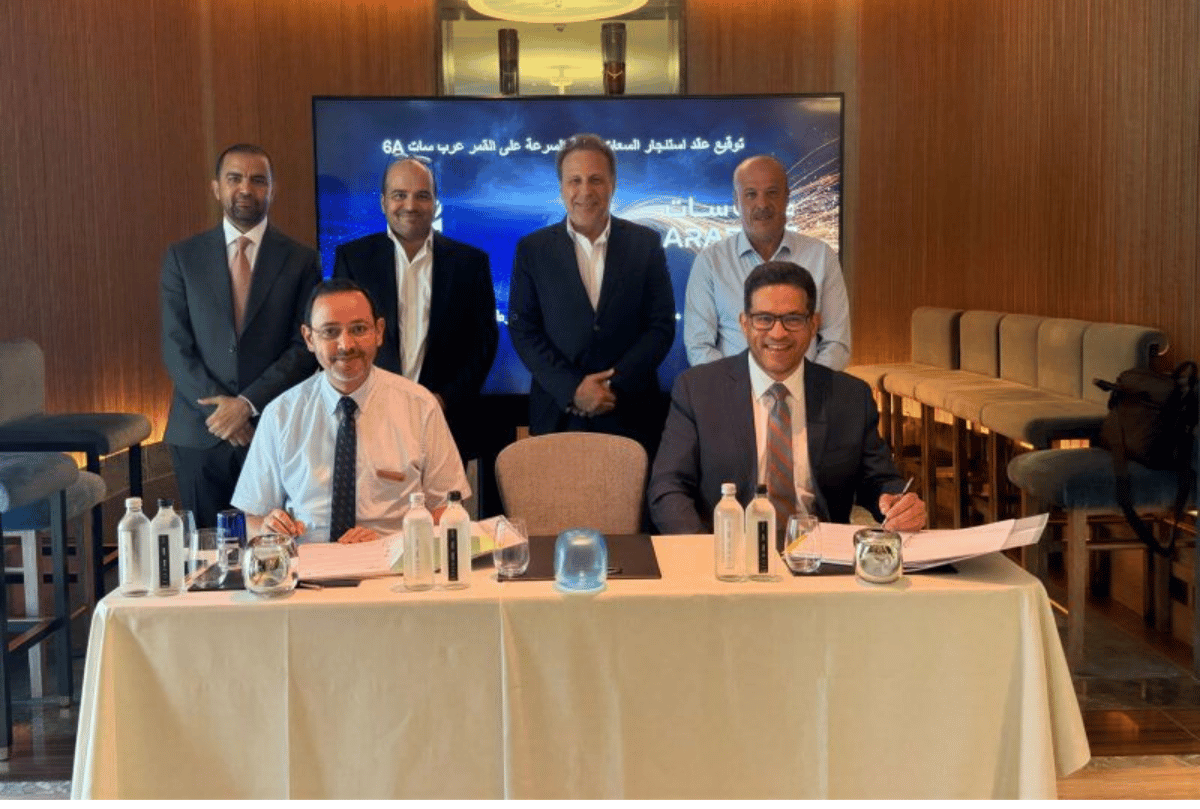
ARABSAT and Libya Telecom and Technology have signed a strategic partnership aimed at strengthening Libya digital infrastructure, a useful regional reminder that connectivity is still the foundation for every digital-economy ambition.
TechAfrica News reports that ARABSAT will provide advanced satellite capacity and satellite communication solutions to LTT under the agreement. The partnership is expected to support government entities, telecom operators, enterprises and critical sectors with secure and high-performance satellite connectivity.
The deal matters because Libya digital transformation will not depend only on fibre or mobile networks. Satellite capacity can help improve resilience, expand reach and provide backup connectivity for strategic sectors where downtime is expensive or dangerous.
ARABSAT CEO Badr N. Alsuwaidan said the partnership reflects a commitment to strengthening Libya telecommunications sector and supporting digital transformation. LTT Chairman Ammar Al-Bouzaidi said combining ARABSAT satellite capabilities with LTT national expertise would improve infrastructure, service quality and reliable connectivity.
The practical value of satellite infrastructure is often clearest in countries where geography, instability or uneven terrestrial networks make connectivity difficult. Satellite links can support remote regions, emergency services, oil and gas operations, government communications, financial networks, education and enterprise continuity.
This is not only a Libya story. Across Africa and MENA, connectivity strategy is becoming more hybrid. Countries need fibre backbones, mobile broadband, data centres, cloud regions and satellite capacity working together. We recently covered Nigeria Project BRIDGE and its 90,000km fibre ambition, while Starlink continues to push satellite internet into African markets. Different technologies are now competing and complementing one another.
For telecom operators, satellite connectivity can be both an opportunity and a pressure point. It can extend networks into underserved regions and provide resilient backhaul, but it can also introduce new competition if satellite providers move closer to consumer and enterprise services directly.
For Libya, the key test will be implementation. Announcing satellite capacity is one step. Turning it into better service quality, stronger enterprise connectivity and more resilient public infrastructure requires integration with national networks, reliable ground systems, regulatory clarity and commercial execution.
The agreement is still worth watching because digital infrastructure deals often decide which countries can move faster on cloud services, e-government, fintech, education technology and AI adoption. Without reliable connectivity, every digital product becomes harder to use and harder to scale.
Libya does not need satellite capacity as a headline. It needs it as working infrastructure. If ARABSAT and LTT can deliver that, the partnership could become a useful part of the country broader digital rebuild.
Related Reading
More contextual TechBooky stories selected from tags, categories and article context.
Paul Balo is the founder of TechBooky and a highly skilled wireless communications professional with a strong background in cloud computing, offering extensive experience in designing, implementing, and managing wireless communication systems.
We use cookies to ensure that we give you the best experience on our website. If you continue to use this site we will assume that you are happy with it.