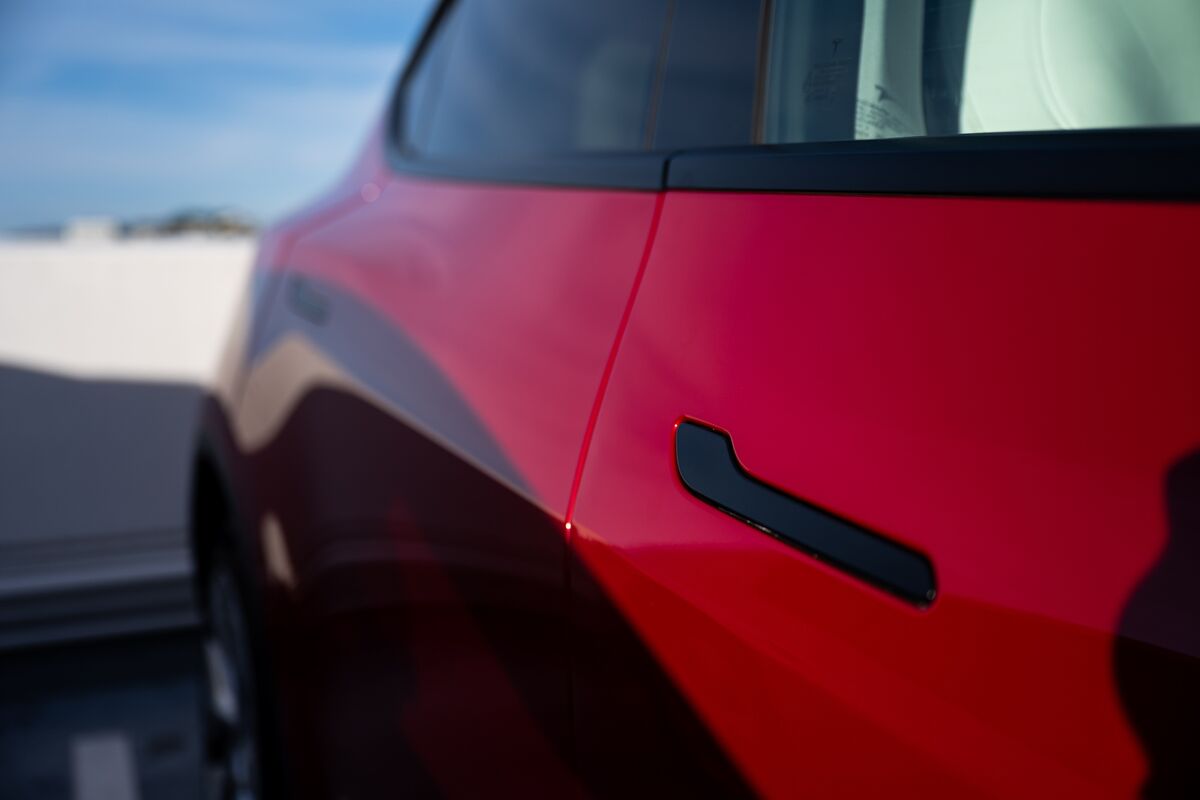
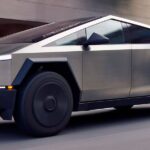
Tesla is part of a major China recall wave over hidden and hard-to-find emergency door releases, and the issue shows how a sleek EV design choice can become a safety problem.
Chinese market-regulator notices cited by local media say several automakers are recalling vehicles because interior emergency mechanical handles can be too similar in colour to surrounding trim, making them hard to identify and operate in a severe crash or power-loss situation. A Sina Finance report lists Tesla among the affected automakers.
Tesla is reportedly recalling 2,975,910 vehicles in China, including locally built Model 3 and Model Y vehicles and imported Model 3, Model S and Model X cars. The fix includes warning labels near emergency mechanical handles and, where applicable, software updates designed to improve unlocking or window behaviour after a crash.
The recall is not only about Tesla. Xiaomi, Xpeng, Geely-linked brands and other manufacturers are also part of the broader action. That matters because hidden handles have become common across the EV industry, partly for design, aerodynamics and brand differentiation.
The problem is that emergency features have to work under stress. A door release that makes sense in a manual may be difficult to find when a passenger is injured, smoke is present, the car has lost power or rescuers are trying to get someone out quickly. In that moment, clever design matters less than obvious design.
China has been moving toward tighter rules on concealed or electronic door-handle systems, with regulators increasingly focused on whether occupants and rescuers can quickly open doors after collisions. That is a sensible direction as EVs add more software-controlled hardware.
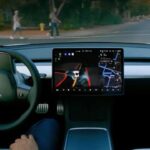
For Tesla, the recall lands in a period when the company is also trying to convince regulators and consumers that its vehicles are becoming more autonomous and more software-defined. We wrote earlier about Tesla robotaxis appearing fully driverless in Austin. The common thread is that software-defined cars still have to satisfy old-fashioned safety expectations.
This also raises a design lesson for the wider auto industry. Features that look clean in a showroom can fail a real-world usability test. Door handles, gear selectors, touch-only climate controls and software menus may all look modern, but safety systems need to be intuitive under pressure.
For consumers, the immediate question is simple: if the car loses power after a crash, can everyone inside quickly identify and use the emergency exit path? Owners should know where those releases are before they ever need them.
Tesla’s China recall does not mean EV design is inherently unsafe. It does mean regulators are starting to force automakers to prove that futuristic design has not made basic escape harder.
Related Reading
More contextual TechBooky stories selected from tags, categories and article context.
Paul Balo is the founder of TechBooky and a highly skilled wireless communications professional with a strong background in cloud computing, offering extensive experience in designing, implementing, and managing wireless communication systems.
We use cookies to ensure that we give you the best experience on our website. If you continue to use this site we will assume that you are happy with it.