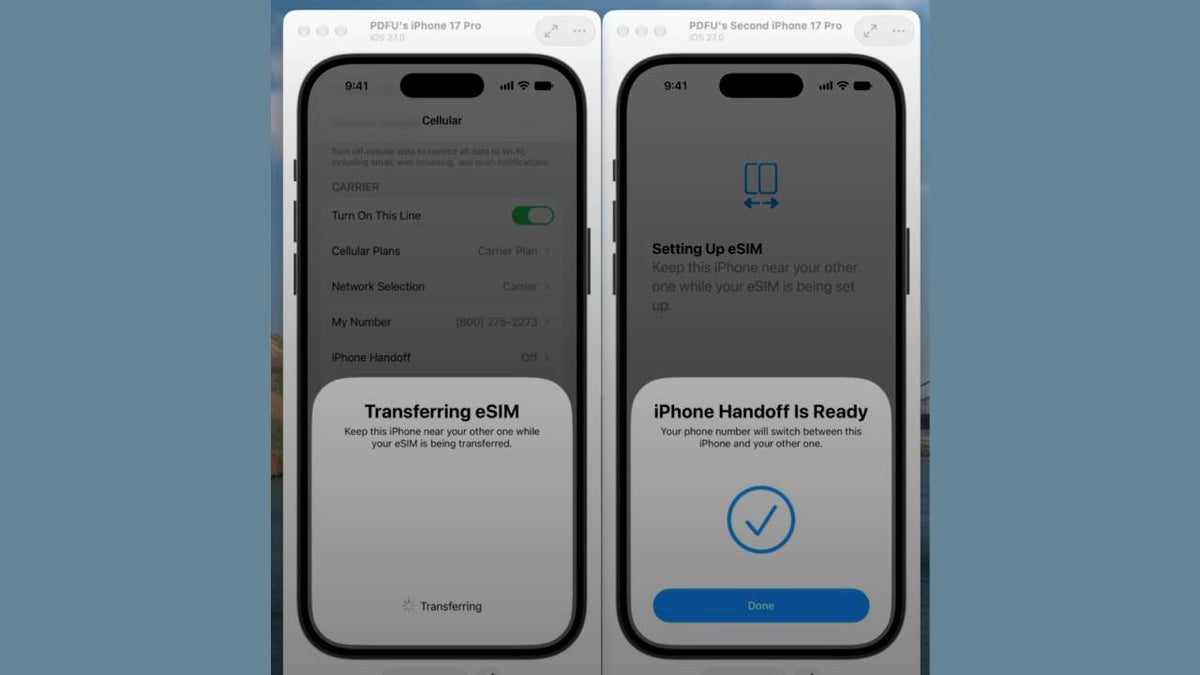
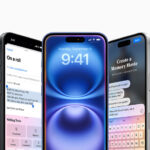
Apple appears to be preparing for a future where one iPhone may not be enough for every situation. A new iOS 27 feature called iPhone Handoff will reportedly let users share one phone number across two iPhones, according to The Verge and other Apple-focused reporting.
The idea sounds simple, but it could be more important than it first appears. A user would be able to keep one primary iPhone and pair a companion device, allowing the same number to move between the two. That could make it easier to use a smaller phone during travel, a cheaper backup device at work, or a different form factor without juggling SIM swaps.
Apple briefly referenced the feature during its broader iOS 27 preview, but the latest reporting gives a clearer picture of how it may work. MacRumors says the setup appears inside the Cellular section of Settings and may depend on carrier support. The Verge notes references to T-Mobile in the US and Telekom.de in Germany, though wider availability is still unclear.
Carrier support will probably decide how useful this becomes. Apple can build the software layer, but phone numbers still sit inside carrier systems. If only a few networks support the feature at launch, iPhone Handoff may feel like a clever preview of the future rather than something most users can immediately rely on.
The timing is interesting because Apple is heading toward its September 9 event, where expectations around new iPhones are already high. The feature also makes more sense in a world where Apple may eventually sell more varied iPhone hardware, including larger, foldable or companion-style devices. A shared number makes device switching feel less like a headache.
This also connects with the wider shift toward devices behaving more like personal computing ecosystems. Google is pushing Gemini into Gmail, Docs and Keep, while Nvidia is trying to make local AI compute more useful through PAIR . Apple’s approach is often slower, but it tends to focus on making transitions between devices feel invisible.
For users in markets where people already carry more than one phone, the appeal is obvious. Many professionals use separate devices for work and personal life. Travellers use backup phones. Some users keep a cheaper device for risky environments. If one number can move cleanly between two iPhones, that habit becomes easier to manage.
The bigger question is whether Apple is preparing for a more flexible iPhone lineup. iPhone Handoff may look like a small cellular feature today, but it could become the plumbing for a world where the iPhone is no longer one device in your pocket, but a set of devices that share identity, apps and connectivity.
Related Reading
More contextual TechBooky stories selected from tags, categories and article context.
Paul Femi Balo is the founder and publisher of TechBooky. He covers artificial intelligence, African technology, digital infrastructure, enterprise technology and the global digital economy.
We use cookies to ensure that we give you the best experience on our website. If you continue to use this site we will assume that you are happy with it.