Tesla has delivered another encouraging quarter, giving investors fresh confidence that its core electric vehicle business is regaining momentum after a turbulent year.
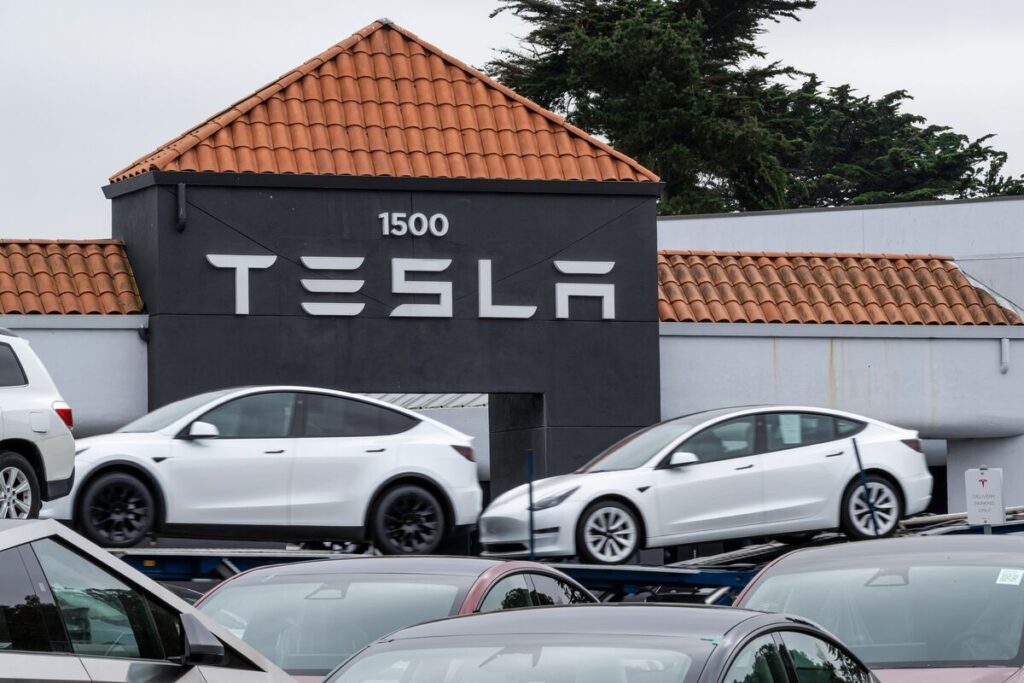
The company reported 410,244 vehicles produced and 403,319 vehicles delivered during the second quarter of 2026, figures that were broadly in line with Wall Street expectations and point to improving global demand for the company’s vehicles. Tesla published the figures in its latest Vehicle Production & Deliveries Report, available on its Investor Relations website.
While the delivery numbers are important, they no longer tell the whole Tesla story.
Unlike just a few years ago, investors are increasingly valuing Tesla not only as the world’s largest electric vehicle manufacturer but also as an artificial intelligence, robotics and autonomous driving company. The quarterly delivery report has become just one of several indicators investors use to gauge the company’s long-term potential.
Much of Tesla’s improved performance appears to have come from stronger demand in Europe.
According to Reuters, higher fuel prices and improving EV demand across several European markets helped support sales during the quarter. At the same time, Tesla’s Shanghai Gigafactory continued exporting large numbers of vehicles to Europe, reinforcing its role as the company’s primary export hub.
China also remained a bright spot.
Reuters separately reported that sales of China-made Tesla vehicles rose significantly during June, providing another boost to quarterly deliveries as exports accelerated.
The U.S. market, meanwhile, remains more challenging following the expiration of several federal EV incentives, making international demand increasingly important to Tesla’s overall performance.
There was a time when Tesla’s quarterly delivery report almost entirely determined how investors reacted to the stock.
That is no longer the case.
Today, many analysts believe Tesla’s future valuation depends just as much on artificial intelligence and robotics as it does on vehicle sales.
Chief among those bets is the company’s Robotaxi platform, which Tesla says will transform personal transportation by enabling fully autonomous ride-hailing services. Alongside that effort is Optimus, Tesla’s humanoid robot, which Elon Musk has repeatedly described as one of the company’s most important long-term projects.
As a result, Tesla’s delivery numbers have become only one part of a much broader investment story.
The question many investors are asking is no longer simply, “How many cars did Tesla sell?”
It’s becoming:
Can Tesla successfully transform itself into one of the world’s leading AI companies?
Tesla’s recovery comes at a time when competition across the electric vehicle industry is intensifying.
Chinese automaker BYD has continued expanding internationally while gaining market share at home, strengthening its position as Tesla’s biggest rival in the global EV race. Traditional manufacturers including Volkswagen, Hyundai, Mercedes-Benz and General Motors are also investing billions of dollars in software-defined vehicles, battery technology and autonomous driving.
That means Tesla no longer enjoys the technological lead it once did.
Instead, the company increasingly differentiates itself through software, charging infrastructure, artificial intelligence and autonomous driving technologies.
Although the latest delivery figures suggest Tesla’s automotive business has stabilized, investors are already looking toward the company’s next catalysts.
Those include wider deployment of Robotaxi services, continued improvements to Full Self-Driving (FSD), progress on Optimus, and the expansion of Tesla’s AI computing infrastructure.
These projects could ultimately prove far more important to Tesla’s valuation than quarterly vehicle deliveries.
That doesn’t mean the automotive business no longer matters.
Far from it.
Tesla still generates the overwhelming majority of its revenue from selling cars. But the premium investors place on the company increasingly reflects expectations about what Tesla might become not simply what it is today.
Tesla’s second-quarter delivery report offers encouraging evidence that demand for its electric vehicles is improving again. For shareholders, that’s welcome news after several challenging quarters.
Yet perhaps the most interesting development is how the conversation around Tesla has changed.
Quarterly delivery numbers once dominated every earnings discussion. Today, they share the spotlight with AI, autonomous driving, robotics and next-generation computing. That shift says as much about the future of Tesla as the delivery figures themselves.
And if Elon Musk’s long-term vision proves correct, the cars may eventually become just one part of a much larger technology company.
Related Reading
More contextual TechBooky stories selected from tags, categories and article context.
Paul Balo is the founder of TechBooky and a highly skilled wireless communications professional with a strong background in cloud computing, offering extensive experience in designing, implementing, and managing wireless communication systems.
We use cookies to ensure that we give you the best experience on our website. If you continue to use this site we will assume that you are happy with it.