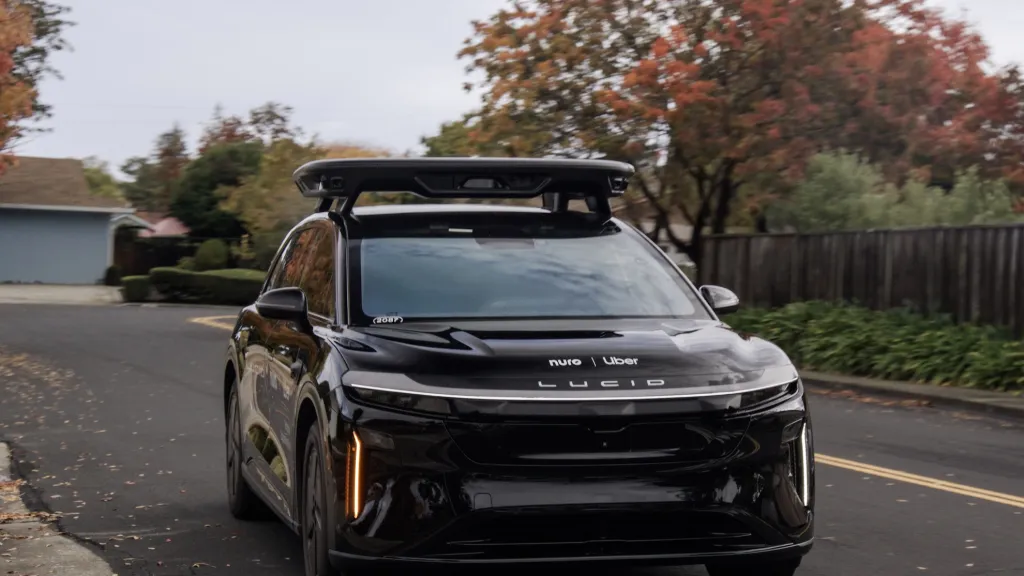
Uber, autonomous-driving company Nuro and electric-car maker Lucid have begun testing their joint robotaxi on public roads without a human safety operator in the vehicle. Nuro announced the milestone on 24 November, saying it follows months of supervised tests in the San Francisco Bay Area.
The change does not mean the public can hail the vehicles today. It means the partners have advanced from trials with an operator behind the wheel to a more demanding driverless testing phase. They are working towards a commercial Bay Area launch in the first quarter of 2027, a timetable Uber had also set out in its third-quarter prepared remarks.
The vehicle combines Lucid’s Gravity electric SUV with Nuro’s autonomous-driving system and Uber’s ride-hailing platform. Moving to tests without an onboard operator is an important technical and operational step because the vehicle must handle normal road conditions without a person immediately available to take the wheel. It is not, however, the same as proof that the service is ready for unrestricted passenger operations.
Nuro says the driverless tests are taking place in four Bay Area cities. The partners have not announced a public booking date, fare structure or the size of the first passenger fleet in this latest update. The next questions are how consistently the system performs, what limits will apply to its operating area and what regulators will permit when commercial rides begin.
Uber is not building this service alone. Its role is to connect riders and fleet operations to technology and vehicles supplied by partners. That model could let it expand autonomous rides without designing every vehicle or driving system itself, but it also makes execution dependent on several companies meeting the same safety and deployment milestones.
The partnership was announced previously; today’s news is the removal of the safety driver from public-road testing. That distinction matters for readers following the crowded robotaxi market. A partnership announcement states an ambition. Driverless testing offers a visible sign of progress, while commercial operation will be a further test of reliability, cost and public confidence.
For cities considering autonomous mobility, there are also practical issues beyond whether a vehicle can drive itself. Emergency response, pickup points, passenger support and clear reporting of incidents all shape whether a robotaxi service feels dependable. The partners’ next milestone will be to show that their technology and their service operations can work together at scale.
Related Reading
More contextual TechBooky stories selected from tags, categories and article context.
We use cookies to ensure that we give you the best experience on our website. If you continue to use this site we will assume that you are happy with it.