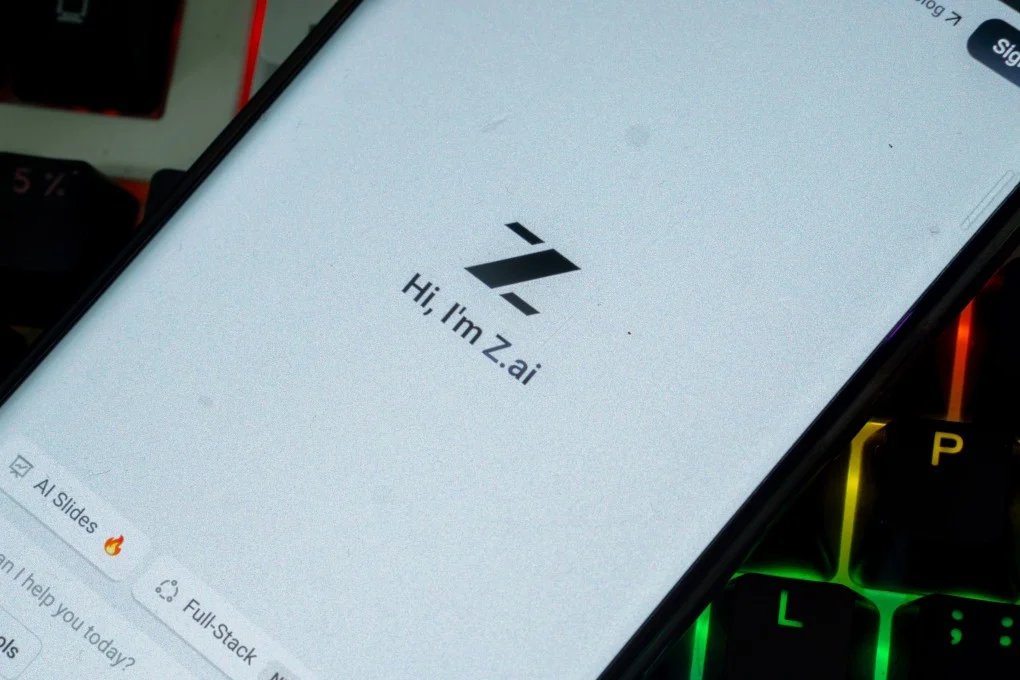
Z.ai has become one of the loudest examples of China’s fast-moving AI challenge. Its GLM models are getting developer attention, its open-weight strategy has helped it travel beyond China, and its recent Ox Alpha reveal gave the company a fresh wave of publicity. But the business side of the story is starting to look more complicated.
Bloomberg reported that Z.ai’s sales missed estimates after China’s AI price war weighed on the company. The headline matters because Z.ai is not a marginal player. It is one of China’s best-known AI model companies and one of the few public windows into whether the country’s low-cost AI strategy can become a durable business.
The problem is simple to understand. Chinese AI companies are trying to win users with powerful models at prices that look far cheaper than many U.S. rivals. That helps adoption. It also trains customers to expect AI to get cheaper very quickly, even while the companies behind those models still have to pay for chips, memory, cloud infrastructure, researchers, engineering teams and support.
Z.ai has spent much of 2026 trying to show that it can compete on capability and cost at the same time. Its developer platform pitches GLM models for coding, agents and enterprise AI workloads, while the company has continued to push model updates aimed at closing the gap with OpenAI, Anthropic, Google and other frontier labs.
The company has also benefited from wider interest in Chinese open-weight models. AP recently described how cheaper and more open Chinese AI models are gaining customers globally, especially among developers and companies that want strong performance without the costs attached to the biggest U.S. systems.
That is the attraction. If a model is good enough for coding, customer support, research, translation or enterprise automation, many businesses will not pay a huge premium for the absolute frontier. This is where companies like Z.ai, DeepSeek, Moonshot and Alibaba’s Qwen family have put real pressure on Western AI pricing.
But the sales miss suggests the market may be learning a harder lesson: low prices can win attention before they prove profitability. AI inference still has a cost. Training better models still has a cost. Serving millions of developers and companies reliably has a cost. If price competition gets too aggressive, revenue growth can look impressive while margins and expectations become harder to defend.
We have already seen signs of that tension across China’s AI market. DeepSeek recently introduced peak and off-peak API pricing, a reminder that even companies famous for cheap AI must eventually manage capacity, congestion and economics. Cheap does not mean unlimited.
Z.ai’s own recent product story adds to the tension. Its GLM-5.3 push showed how fast China’s open-weight coding race is moving, with the company claiming stronger agentic and coding performance. Business Insider also reported that Z.ai confirmed it was behind Ox Alpha, a mystery model that attracted developer attention before being linked to GLM-5.3-Flash.
That kind of product momentum is valuable, but public markets ask different questions from developers. Developers ask whether the model is fast, capable, cheap and easy to integrate. Investors ask whether usage turns into revenue, whether revenue turns into margin, and whether the company can keep spending enough on compute without constantly diluting shareholders or depending on state-backed support.
This is why Z.ai is such a useful case study. It sits at the centre of several big AI themes at once: China’s challenge to U.S. labs, the appeal of open-weight models, the pressure on API pricing and the question of whether model companies can become strong businesses rather than impressive engineering teams.
For users outside the U.S. and China, including developers in Africa, the price war is still good news in the short term. More capable and cheaper models mean more teams can build AI products without needing Silicon Valley budgets. Our earlier explainer on open-weight AI models made that same point: wider access can change who gets to build with AI.
The long-term question is whether those low prices are sustainable. If they are, Chinese labs could reshape the global AI market by making intelligence cheap and widely available. If they are not, the market may consolidate around the few companies with enough cash, chips and cloud infrastructure to survive a long pricing battle.
Z.ai’s reported miss does not mean China’s AI story is weakening. It means the story is entering a more serious phase. Benchmarks and viral model launches can win headlines, but earnings force a tougher conversation. The AI race is no longer only about who builds the smartest model. It is also about who can afford to keep serving it.
Related Reading
More contextual TechBooky stories selected from tags, categories and article context.
Paul Femi Balo is the founder and publisher of TechBooky. He covers artificial intelligence, African technology, digital infrastructure, enterprise technology and the global digital economy.
We use cookies to ensure that we give you the best experience on our website. If you continue to use this site we will assume that you are happy with it.