TechBooky AI Assistant
👋 Welcome to TechBooky AI Assistant

I can help with:
🔎 Tech News
🤖 AI Topics
💻 Gadgets
☁️ Cloud
✍️ Guest Posts
📢 Advertising
🔗 Backlinks
📩 Newsletter
  • AI Search
  • Cryptocurrency
  • Earnings
  • Enterprise
  • About TechBooky
  • Submit Article
  • Advertise With TechBooky
  • Contact Us
TechBooky
  • African
  • AI
  • Metaverse
  • Gadgets
Generic selectors
Exact matches only
Search in title
Search in content
Post Type Selectors
Search in posts
Search in pages
  • African
  • AI
  • Metaverse
  • Gadgets
Generic selectors
Exact matches only
Search in title
Search in content
Post Type Selectors
Search in posts
Search in pages
TechBooky
Generic selectors
Exact matches only
Search in title
Search in content
Post Type Selectors
Search in posts
Search in pages
Home Artificial Intelligence

Huawei Profit Slump Shows AI Chip Self-Reliance Is Costly

Paul Balo by Paul Balo
August 31, 2026
in Artificial Intelligence, Business, Earnings, Hardware
Share on FacebookShare on Twitter
Share this story

Send it to someone who should read it.

f Facebook X X in LinkedIn wa WhatsApp tg Telegram @ Email

In Brief
  • Huawei’s comeback story is still alive, but it is becoming more expensive.
  • The Chinese technology giant reported stronger first-half revenue for 2026, yet profit fell sharply as higher research spending, supply-chain pressure and the cost of building around...
  • Bloomberg reported that Huawei’s profit decline widened as a memory crunch took its toll.

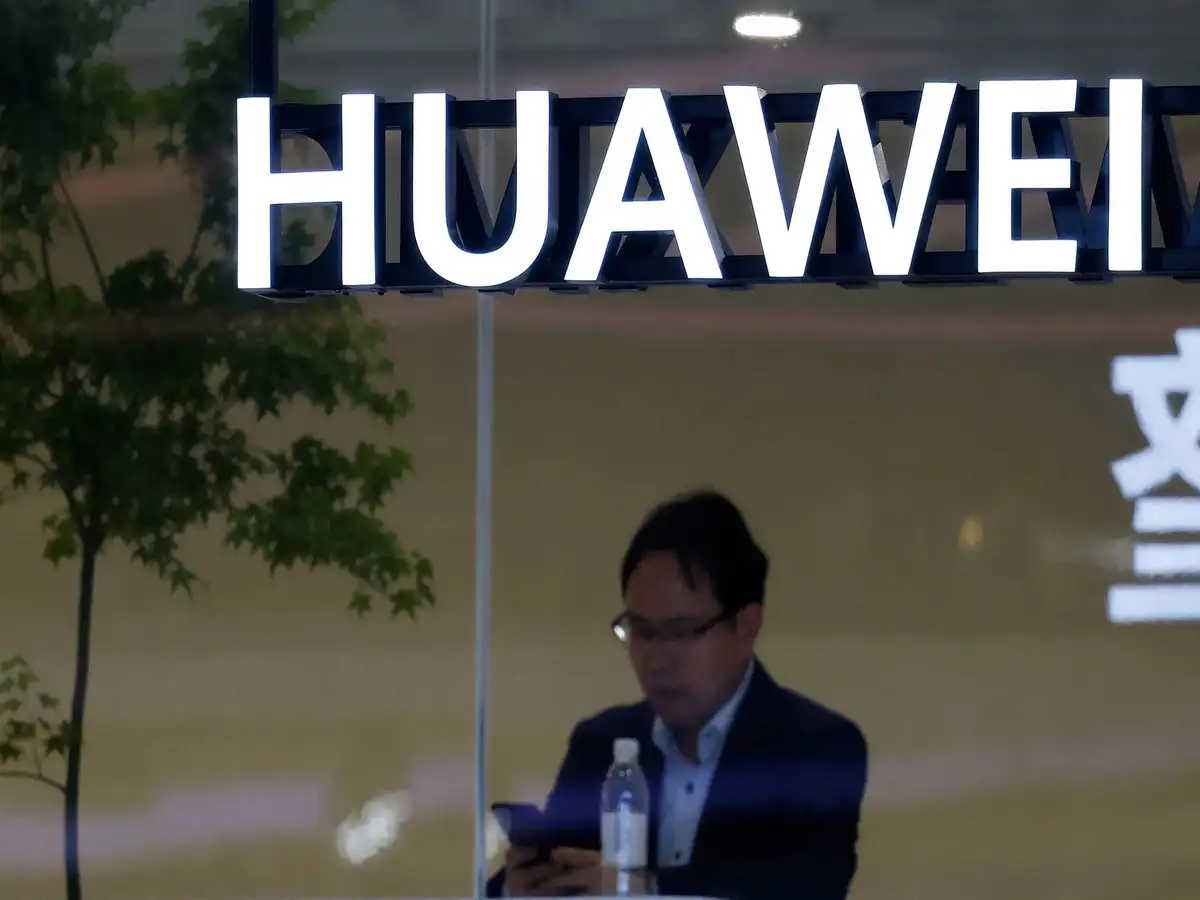
Huawei’s comeback story is still alive, but it is becoming more expensive. The Chinese technology giant reported stronger first-half revenue for 2026, yet profit fell sharply as higher research spending, supply-chain pressure and the cost of building around restricted technology weighed on the business.

Bloomberg reported that Huawei’s profit decline widened as a memory crunch took its toll. Other financial reports put the first-half picture in clearer numbers: revenue rose 9.6 percent to about 467.82 billion yuan, while net profit dropped by roughly a third to around 23.8 billion yuan.

That is the tension at the heart of Huawei now. The company is selling more, especially as its consumer devices, telecoms equipment, cloud infrastructure and intelligent vehicle partnerships recover from the worst of the U.S. sanctions era. But the cost of staying competitive without easy access to the most advanced Western technology is eating into margins.

Research and development is the clearest sign of that pressure. Reports on the first-half results say Huawei’s R&D expenses rose to about 121.38 billion yuan, equal to nearly 26 percent of revenue. Huawei’s 2025 annual report had already shown how deeply the company is leaning into R&D, with 192.3 billion yuan spent last year alone.

For any normal hardware company, that level of spending would be extraordinary. For Huawei, it is almost existential. Since Washington placed the company on a trade blacklist in 2019, Huawei has had to rebuild supply chains, find substitutes for U.S.-origin technology, revive its smartphone business and support China’s wider push for domestic AI compute.

The AI chip angle is especially important. Huawei’s Ascend processors are now central to China’s attempt to reduce dependence on Nvidia hardware. Demand from Chinese AI labs, cloud providers and state-linked projects has made Huawei one of the most important companies in the country’s AI infrastructure story, but building that alternative stack is not cheap.

Also worth reading
China’s CXMT Turns The AI Memory Crunch Into A Chip Victory Nvidia’s $96.2B Quarter Shows The AI Boom Has Not Slowed Yet Samsung Memory Warning Shows AI Chip Shortage May Last Into 2028 Open Weights Are Becoming Less Open As AI Labs Add Conditions Nvidia Wants To Power The World’s Robots As China Buys In China Moves AI Data Centres To Rural Provinces For Cheaper Power

That is why this result should not be read only as a weak earnings story. It is also a price tag for technological independence. Huawei can keep investing in chips, software, cloud systems, smartphone components and automotive technology, but every yuan spent on replacing unavailable foreign technology is a yuan that does not immediately fall to the bottom line.

The memory crunch makes that harder. AI chips and advanced smartphones depend heavily on high-bandwidth memory and other specialised components. If memory supply is tight or costly, companies trying to scale AI hardware face pressure from both sides: they must spend more to build capacity while competing against global rivals with deeper access to mature supply chains.

This links back to Huawei’s broader chip strategy. In May, Huawei outlined a plan to challenge Nvidia and work around U.S. sanctions through system-level efficiency, advanced packaging and new chip-design approaches rather than simply waiting for China to catch up on the smallest manufacturing nodes.

That strategy may still prove powerful, but it will take time. Nvidia’s advantage is not only silicon. It includes memory access, networking, software libraries, developer trust and a global cloud ecosystem. Huawei has to recreate enough of that ecosystem inside China while also keeping its existing telecoms, cloud, smartphone and enterprise businesses competitive.

The profit decline therefore reveals something bigger than a bad half-year. It shows how the global technology split is creating real financial costs. China wants a domestic AI stack. Huawei is one of the few companies capable of helping build it. But self-reliance is not a slogan on a balance sheet; it is R&D, inventory, procurement, engineering talent, lower margins and patience.

For the rest of the world, including Africa, this matters because the AI infrastructure market may become increasingly divided between U.S.-aligned Nvidia systems and China-backed alternatives. If Huawei succeeds, more countries could eventually get another path to AI compute. If the cost burden keeps growing, China’s AI hardware push may remain powerful but expensive, and that price will shape who gets access to the next wave of artificial intelligence.

Related Reading

More contextual TechBooky stories selected from tags, categories and article context.

  • Google 1
    Huawei Records Stable Q3 Revenue Despite Challenges
  • https___cms-image-bucket-productionv3-ap-northeast-1-a7d2.s3.ap-northeast-1.amazonaws.com_images_1_3_8_2_12912831-1-eng-GB_311be8c233f8-KakaoTalk_Photo_2026-07-22-18-10-30-001
    SK Hynix Posts Record AI Memory Profit But Shares…
  • Seagate_Headquarters_Fremont
    Seagate Profit Soars As AI Data Centres Drive Storage Demand
  • Screen-Shot-2021-12-13-at-13.34.04-e1639406535837
    Samsung’s Profit Surges 160% as AI Chip Demand…
  • FILE PHOTO: FILE PHOTO: Illustration shows CXMT logo and Chinese flag
    CXMT Surges 470% As China Bets Big On AI Memory Chips
  • im-916944
    Report Has Shown Apple iPhone Sales Drop 19% For Q1 In China
  • Fintech-Giants-Drive-Chinas-AI-Cloud-Boom-with-Alibaba-and-Baidu-Leading-the-Market-scaled
    Alibaba Raises $10.2B As China's AI Race Gets More Expensive
  • Qualcomm-logo-scaled
    Qualcomm Profit Falls As Memory Costs And Weak…
Keep Reading Smarter

Search TechBooky with AI

Use TechBooky's AI Search to explore the context behind this story and related coverage across the site.

Try AI Search
More On This Topic
Artificial Intelligence Business Earnings Hardware
Follow TechBooky

Follow TechBooky for more technology stories and newsroom updates.

f Facebook X X in LinkedIn ig Instagram wa WhatsApp

Tags: ai chipsAscend chipsChina AIHuaweiSemiconductors
Paul Balo

Paul Balo

Paul Balo is the founder of TechBooky and a highly skilled wireless communications professional with a strong background in cloud computing, offering extensive experience in designing, implementing, and managing wireless communication systems.

Search TechBooky
Open TechBooky AI Search Try the AI Assistant

BROWSE BY CATEGORIES

Receive top tech news directly in your inbox

subscription from
Loading

Freshly Squeezed

  • Huawei Profit Slump Shows AI Chip Self-Reliance Is Costly August 31, 2026
  • OpenClaw 2.0 Shows Personal AI Agents Are Growing Up August 31, 2026
  • OpenAI SB Energy Deal Shows AI Finance Shift August 31, 2026
  • OpenAI’s Hugging Face Postmortem Makes Rogue AI Harder To Ignore August 31, 2026
  • Nigeria’s Assistive Tech Push Exposes A Bigger Digital Access Failure August 31, 2026
  • Bank Of England Warns G20 That Frontier AI Could Shake Finance August 31, 2026
  • Meta Buys Robotics AI Startup As Big Tech Moves Into Humanoids August 30, 2026
  • Open Weights Are Becoming Less Open As AI Labs Add Conditions August 30, 2026
  • Sanctuary AI Shows Why Robot Brains May Reach Factories First August 30, 2026
  • Nvidia Wants To Power The World’s Robots As China Buys In August 30, 2026
  • China Moves AI Data Centres To Rural Provinces For Cheaper Power August 30, 2026
  • Sony And Warner Sue Anthropic As AI Copyright Fight Moves To Music August 30, 2026

Browse Archives

August 2026
M T W T F S S
 12
3456789
10111213141516
17181920212223
24252627282930
31  
« Jul    

Quick Links

  • About TechBooky
  • Advertise With TechBooky
  • Contact us
  • Submit Article
  • Privacy Policy
Generic selectors
Exact matches only
Search in title
Search in content
Post Type Selectors
Search in posts
Search in pages
  • African
  • Artificial Intelligence
  • Gadgets
  • Metaverse
  • Tips
  • AI Search
  • About TechBooky
  • Advertise With TechBooky
  • Submit Article
  • Contact us

© 2025 Designed By TechBooky Elite

Discover more from TechBooky

Subscribe now to keep reading and get access to the full archive.

Continue reading

We use cookies to ensure that we give you the best experience on our website. If you continue to use this site we will assume that you are happy with it.