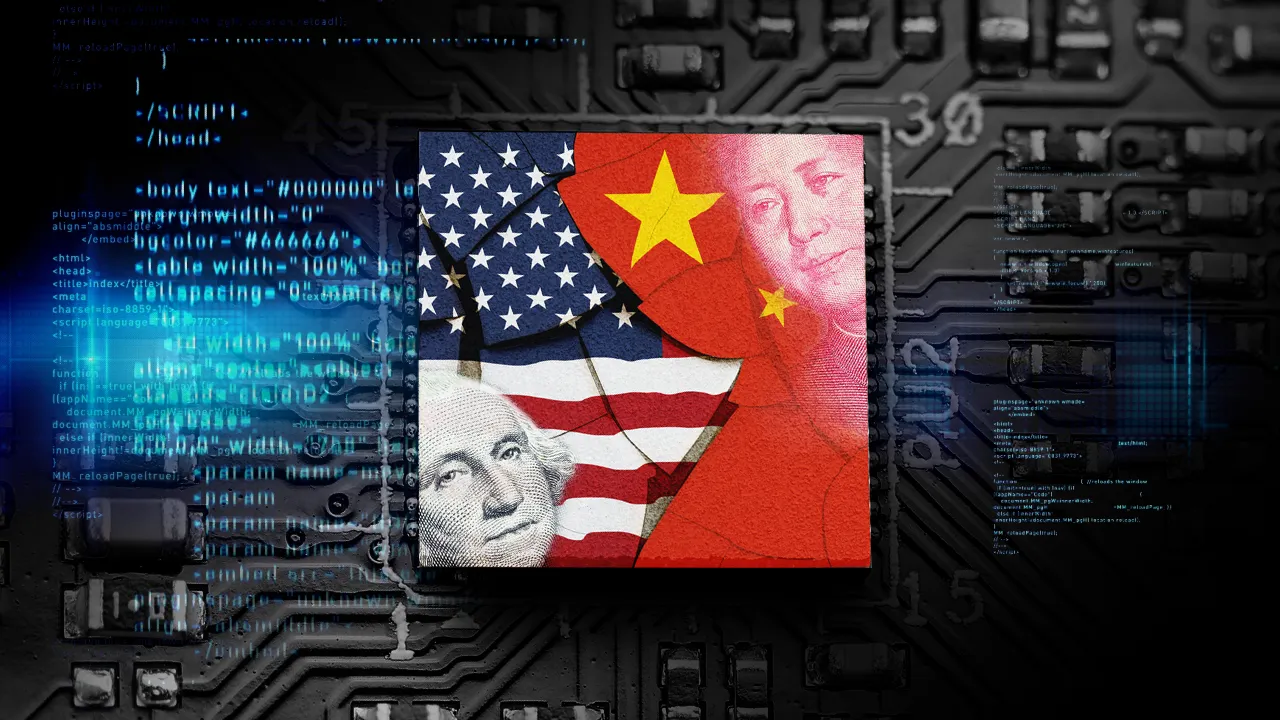
China and the United States are competing to lead artificial intelligence, but their citizens are approaching the technology with strikingly different instincts. In China, AI is increasingly treated as the next layer of the internet, something to use, integrate and improve. In the United States, the public conversation is more likely to begin with job losses, surveillance, copyright and the fear of machines becoming too powerful.
A Morgan Stanley survey captures the gap. About 80 percent of Chinese respondents said they use AI every week for personal purposes, compared with 54 percent in the US. China’s number of generative AI users also climbed from roughly 249 million at the end of 2024 to 602 million a year later. Adoption at that scale creates habits, data, feedback and a large home market for new products.
The difference is not that China ignores risk. Beijing tightly controls online information, requires security reviews and has imposed rules on algorithms and generative AI. But it has also made adoption a national economic priority. AI functions are being placed inside super-apps, phones, vehicles, factories, classrooms and public services, often without asking users to download a separate product.
The US still leads where it matters enormously. American companies attract far more private AI investment, operate the world’s most valuable cloud platforms and produce many of the strongest frontier models and chips. Stanford’s 2026 AI Index put US private AI investment far ahead of China’s. That capital, research depth and semiconductor ecosystem cannot be dismissed.
Yet a technology race is not won only in laboratories. The internet became transformative because ordinary people and businesses used it everywhere. If Chinese consumers experiment with AI more frequently, developers can test products faster and companies can spread successful tools across huge digital platforms. Cheaper models from firms such as DeepSeek, Moonshot AI and Alibaba also make deployment easier.
America’s scepticism has legitimate roots. AI companies have often released products before society agreed on responsibility, compensation or safety. But fear can become a competitive weakness when it produces confusion instead of workable rules. TechBooky’s coverage of the China AI race shows that the contest now includes adoption, energy, talent and open-weight models, not simply benchmark scores.
The answer for the US is not to copy China’s political model or abandon safeguards. It is to build public confidence through clear liability rules, better AI education, support for workers and affordable access for schools and small businesses. The country that makes AI broadly useful while keeping it trustworthy will have the stronger position. Right now, China appears more comfortable treating AI as infrastructure, while America is still deciding whether it sees a tool or a threat.
Related Reading
More contextual TechBooky stories selected from tags, categories and article context.
Paul Balo is the founder of TechBooky and a highly skilled wireless communications professional with a strong background in cloud computing, offering extensive experience in designing, implementing, and managing wireless communication systems.
We use cookies to ensure that we give you the best experience on our website. If you continue to use this site we will assume that you are happy with it.