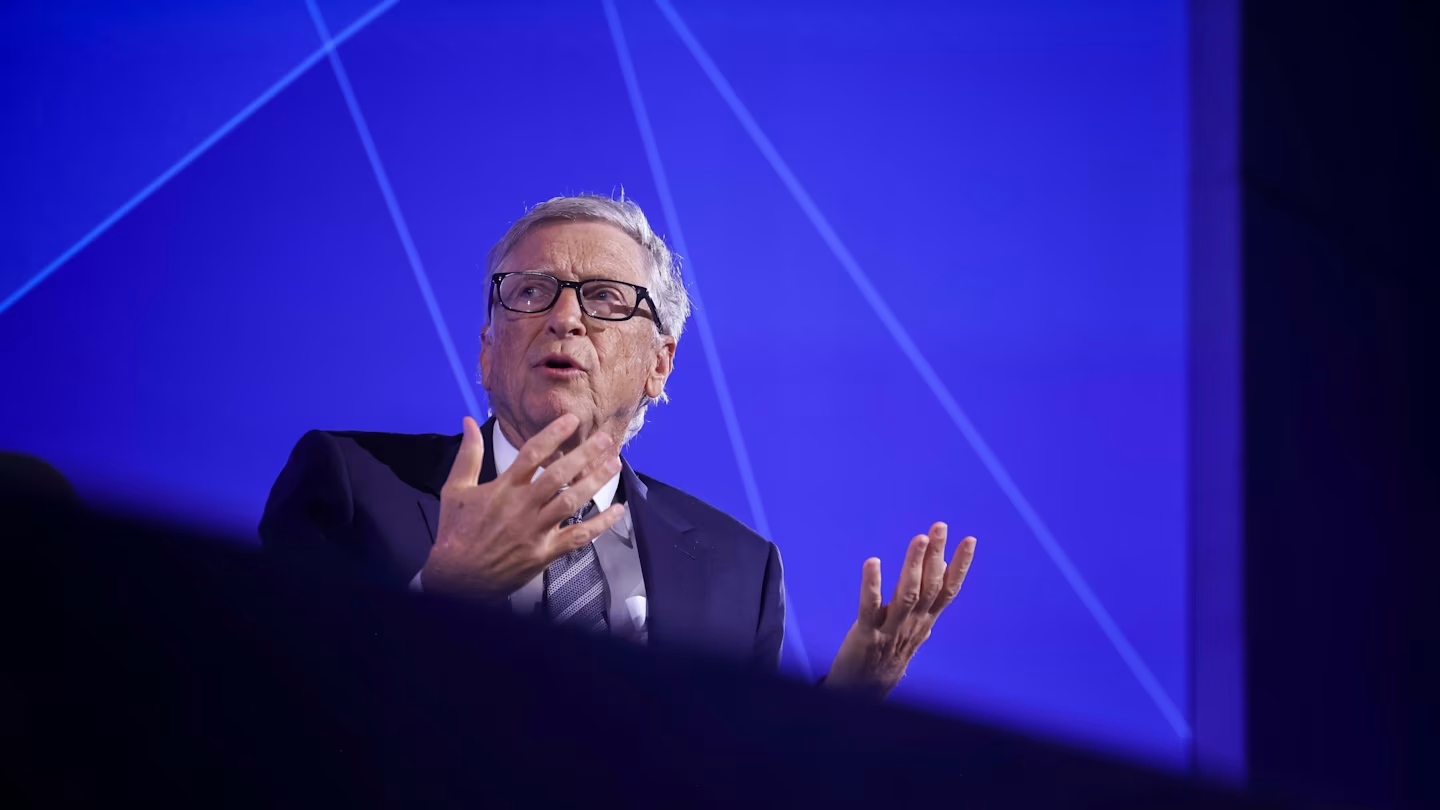
Bill Gates has returned to the AI debate with a message that is both optimistic and uncomfortable: AI could make the world fairer, but only if governments stop pretending the transition will manage itself.
In a new Gates Notes essay, the Microsoft co-founder argues that the world is entering one of the most turbulent periods in human history. He says AI could become the greatest equalizer ever invented or one of the worst sources of injustice, depending on the choices made now.
The two ideas getting the most attention are a robot tax and what Gates calls Human Reserved jobs. The robot tax idea is straightforward: if employers pay taxes when they hire people, governments should consider whether companies should also face a tax burden when they replace workers with robots or AI systems. The money could support retraining, income support and a stronger social safety net.
The Human Reserved idea is more philosophical. Gates argues that society may decide certain jobs or tasks should remain human even when machines can technically do them. He points to areas such as health, education, care work and other roles where empathy, trust, judgement and human presence matter as much as efficiency.
This is the important part of the argument. Gates is not saying AI should be stopped. He is saying the market should not be the only force deciding which work disappears. If a task can be automated, companies will often have a financial incentive to automate it. But what is efficient for a balance sheet may not always be healthy for society.
That question is becoming more urgent as AI moves from text generation into agents, robotics, coding, customer service, legal work, finance and healthcare support. A chatbot can write a report. An agent can complete a workflow. A robot may eventually do physical tasks that once seemed protected from automation. The line between white-collar and blue-collar disruption is becoming weaker.
Gates also raises a point that African and emerging-market economies should watch carefully. If AI makes expertise cheaper, it could improve access to healthcare, education, agriculture advice and business services. But if the gains are captured mostly by large technology companies and rich countries, the same technology could widen inequality.
That is where open models, local infrastructure and policy choices matter. We have already argued that open-weight AI models can make AI more accessible, but accessibility alone is not a labour policy. Governments still need to think about taxation, education, worker transition and which public services should keep humans in charge.
The robot tax will be controversial. Companies will argue that it could slow productivity and make domestic firms less competitive against countries that automate faster. That is a real concern. But doing nothing also has a cost if millions of workers discover too late that their skills were not being upgraded for the economy that was coming.
Gates is useful here because he is forcing a harder conversation. AI optimism is easy when the discussion is about productivity. It becomes harder when the discussion is about who loses bargaining power, who pays for transition, and which human roles society still values even when machines become cheaper.
Related Reading
More contextual TechBooky stories selected from tags, categories and article context.
Paul Balo is the founder of TechBooky and a highly skilled wireless communications professional with a strong background in cloud computing, offering extensive experience in designing, implementing, and managing wireless communication systems.
We use cookies to ensure that we give you the best experience on our website. If you continue to use this site we will assume that you are happy with it.