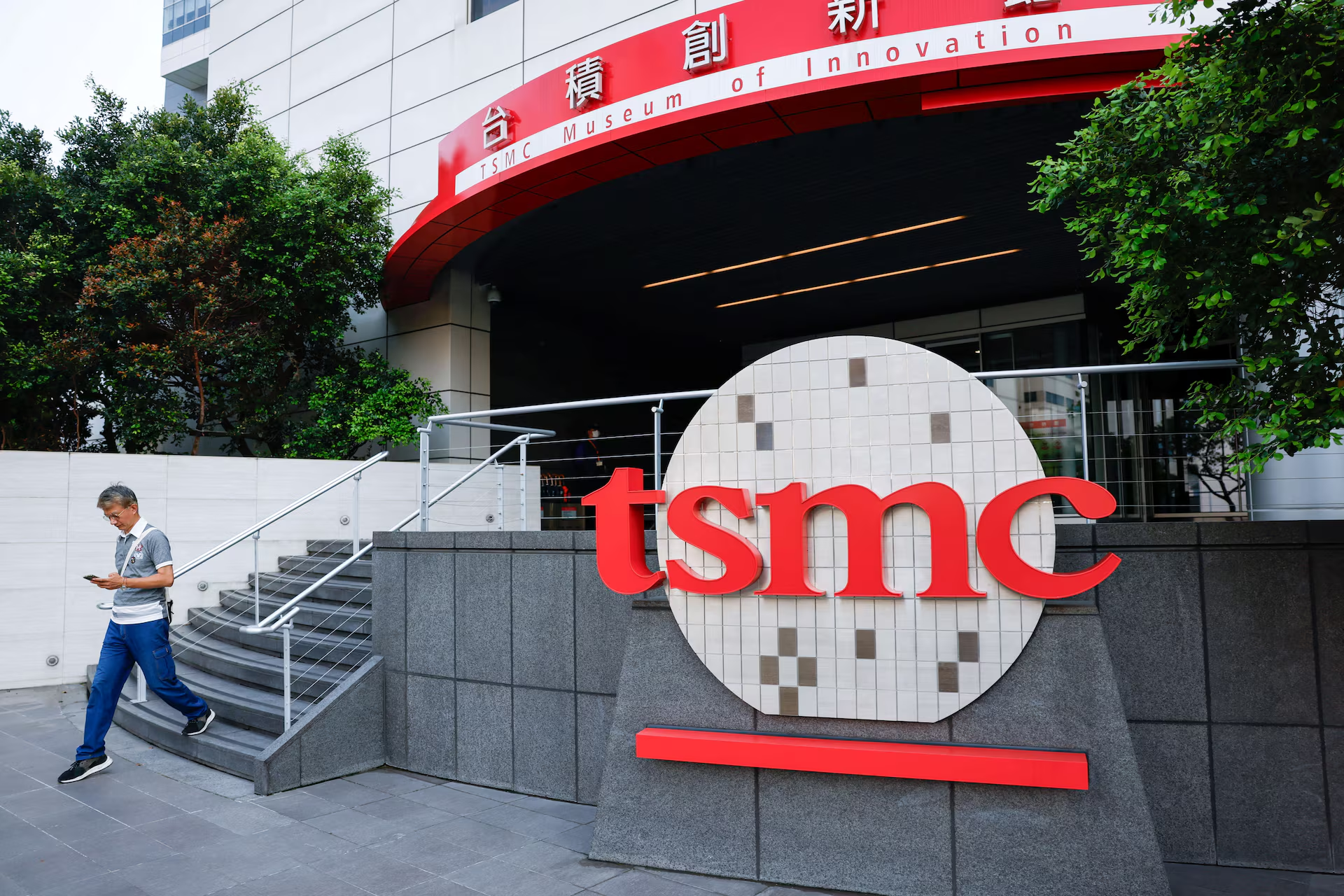
TSMC’s third-quarter profit jumped nearly 69% from a year earlier, giving the clearest evidence yet this week that demand for the chips behind artificial intelligence remains strong even as investors question the cost of the wider AI buildout. The Taiwanese manufacturer reported net income of NT$763.06 billion and revenue of US$46.72 billion for the three months ended September 30, according to its quarterly results.
Revenue in US dollars rose 41.2% year over year. Gross margin reached 66.4%, up from 59.5% in the same quarter last year, while earnings per American depositary receipt climbed to US$4.60. These are not merely higher sales on thinner margins. TSMC is earning more from the advanced manufacturing capacity that AI and other high-performance computing customers need.
TSMC manufactures chips for a broad range of technology companies, so its accounts offer a rare look at the physical side of the AI boom. Demand for a model or cloud service eventually becomes demand for wafers, packaging and manufacturing slots. That makes TSMC’s performance a useful counterweight to the argument that AI spending is all promises and no orders.
It does not, however, settle whether every company buying those chips will earn an attractive return. A foundry can benefit while its customers are still experimenting with prices and business models. That distinction matters as technology shares face renewed pressure across Asia. A market report from AP describes sharp falls in several chip-related stocks on Thursday, despite TSMC’s strong figures.
The contrast also helps explain the industry’s mood. Investors are no longer satisfied with proof that AI hardware can sell. They want to know how much capacity companies must finance, how long demand can hold up and whether future profits justify today’s enormous spending. TSMC’s revenue and margins answer part of that question for the manufacturer, not necessarily for every buyer in its supply chain.
Supply remains a central theme. Our recent report on ByteDance’s AI chip supply constraints showed that obtaining processors is only one piece of the problem; packaging materials and other specialised components can limit expansion too. TSMC’s scale and manufacturing position make it a critical gatekeeper as cloud providers and chip designers race to add compute.
The next thing to watch is how TSMC balances that demand against its capital spending and production timetable. The company has delivered another record quarter. Whether the rest of the AI economy can convert those chips into durable profits remains the much larger test.
Related Reading
More contextual TechBooky stories selected from tags, categories and article context.
Paul Balo is the founder of TechBooky and a highly skilled wireless communications professional with a strong background in cloud computing, offering extensive experience in designing, implementing, and managing wireless communication systems.
We use cookies to ensure that we give you the best experience on our website. If you continue to use this site we will assume that you are happy with it.