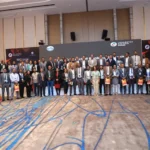
A new industry project is bringing some of Africa’s largest mobile operators together around a shared technology foundation for financial services. TM Forum announced its Open Digital Architecture for Fintech at Africa Tech Festival on 18 November, naming MTN, Safaricom and Vodacom among the operators that have joined the initiative.
The aim is to make it easier for telecoms operators, banks and fintech firms to connect their systems and launch services. That sounds technical, but the commercial problem is familiar across Africa. A mobile money product may rely on separate customer records, identity checks, payment rails, fraud systems and banking partners. Each new integration can be costly and slow when the organisations involved use different interfaces and ways of working.
TM Forum says the project will supply an architecture, executable reference code and collaboration focused on the point where telecoms and financial services meet. The idea is to build on its existing Open Digital Architecture, originally developed for modernising operators’ IT, and adapt it to payments and other financial products. Botswana Telecoms Corporation and MTC are also listed among participating African operators, alongside companies from other markets.
An architecture is not itself a new consumer wallet or a promise that different mobile money networks will become interoperable overnight. It gives participants a common technical language and reusable starting point. The hard work of connecting institutions, satisfying local regulators, protecting customer information and agreeing commercial terms would still remain.
Mobile operators already play a central role in digital payments in many African markets. Their networks and agents can reach customers who have limited access to bank branches, while their fintech units increasingly compete and cooperate with banks. A shared technical framework could reduce repetitive integration work and make it simpler for smaller partners to bring a service to market.
The project’s AI-ready positioning also deserves scrutiny. AI may help with customer support, fraud detection and operations, but the immediate question is whether the architecture makes existing payment systems work together more reliably. Success should be measured by working integrations, lower costs and usable services, not by the number of companies named in a launch announcement.
TM Forum has not announced a consumer launch date or a single pan-African payment product. For now, this is an industry-building effort with influential operators at the table. Its value will become clearer as members release reference implementations and show which barriers they can actually remove.
Related Reading
More contextual TechBooky stories selected from tags, categories and article context.
Paul Femi Balo is the founder and publisher of TechBooky. He covers artificial intelligence, African technology, digital infrastructure, enterprise technology and the global digital economy.
We use cookies to ensure that we give you the best experience on our website. If you continue to use this site we will assume that you are happy with it.