OpenAI unveiled Atlas, a new web browser built around its flagship chatbot ChatGPT, marking a bold move into territory long dominated by Google Chrome. The browser is available immediately on macOS, with Windows, iOS and Android versions promised soon.
At its core, Atlas integrates ChatGPT as a sidebar companion within the browsing experience. Users can highlight text, ask for summaries, compare products or analyse data from any webpage. Paid-tier users can activate “Agent Mode” which allows ChatGPT to carry out entire sequences of browsing tasks research, booking, shopping on a user’s behalf.
OpenAI CEO Sam Altman framed the launch as “a rare, once-in-a-decade opportunity to rethink what a browser can be about,” arguing that the chat interface combined with the web is the next logical step, supplanting the traditional URL bar and search box.
Google Chrome currently holds roughly 71.9% global market share, making it one of the most entrenched consumer‐tech platforms in existence. By building Atlas, OpenAI is not just launching another browser, it is stepping into a control point of how people navigate the internet, access information, and, by extension, how online advertising and search traffic flow.
If even a meaningful fraction of ChatGPT’s reported 800 million weekly users shift to Atlas, the implications are vast. Google may lose not only browser traffic but the associated advertising value of that traffic.
Deep chat integration: Unlike legacy browsers that add chat features as overlays or extensions, Atlas embeds ChatGPT at the browser level.
Agent automation: The browser’s ability to act autonomously on behalf of the user, by navigating websites and completing tasks, marks a step toward “agentic browsing.”
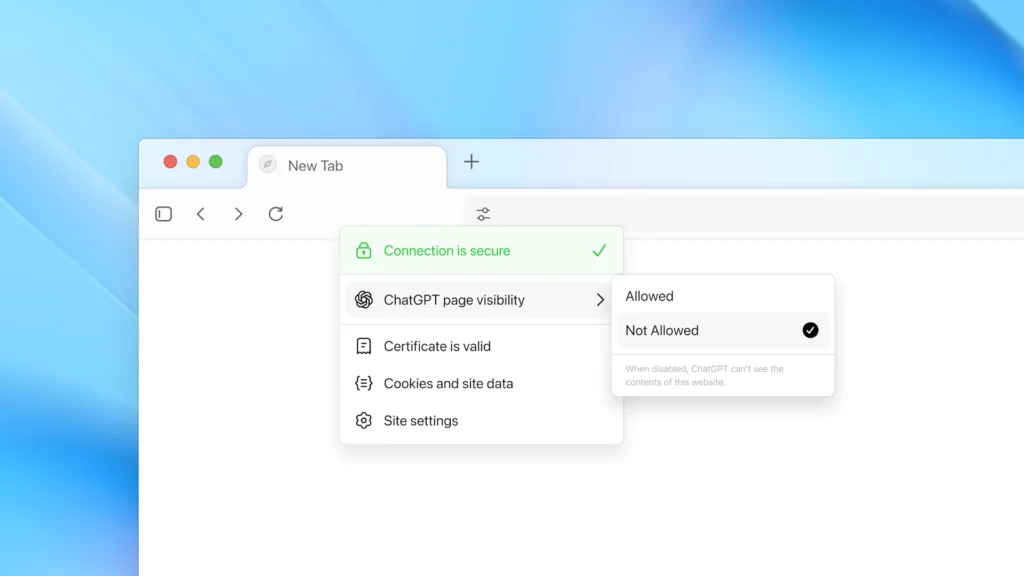
Privacy & memory controls: OpenAI says users are opted out by default from having browsing data used to train models, and can adjust memory settings and delete history.
Strategic timing: With legacy browser models creaking, and AI models reshaping search and discovery, OpenAI believes the time is right to disrupt the status quo.
Despite the fanfare, Atlas faces substantial hurdles. Chrome’s user base is massive and deeply embedded; user habits are hard to change. Analysts caution that OpenAI will have to prove reliability, extensibility, and business viability beyond novelty.
Monetisation remains an open question. While Atlas today is not anchored around advertising, the ability to collect rich browsing context could steer the browser toward ad-supported or subscription models putting it directly in competition with Google’s ad engine.
There are also concerns around content flow and ecosystem impact: if users are served summaries and tasks inside the browser rather than clicking through to websites, publishers and search ecosystems may feel the effect.
OpenAI’s move into a full browser signals the next phase of AI’s integration into everyday computing. Browsers have long stood as gateways — to search, to content, to commerce. By inserting ChatGPT at that gateway, OpenAI is positioning itself not just as a model maker, but as the interface through which the internet is experienced.
For Google, the warning lights are real. Even if Chrome remains dominant for now, the architecture of the web may be shifting: from search bars and pages toward conversation and agents. That shift could redefine how information is accessed, monetised and trusted.
For users and enterprises, the arrival of Atlas opens new possibilities and questions. Do you trust a browser that acts on your behalf? How will privacy, attribution and content economics evolve? And how will competition shape the web’s next generation?
Related Reading
More contextual TechBooky stories selected from tags, categories and article context.
Paul Balo is the founder of TechBooky and a highly skilled wireless communications professional with a strong background in cloud computing, offering extensive experience in designing, implementing, and managing wireless communication systems.
We use cookies to ensure that we give you the best experience on our website. If you continue to use this site we will assume that you are happy with it.