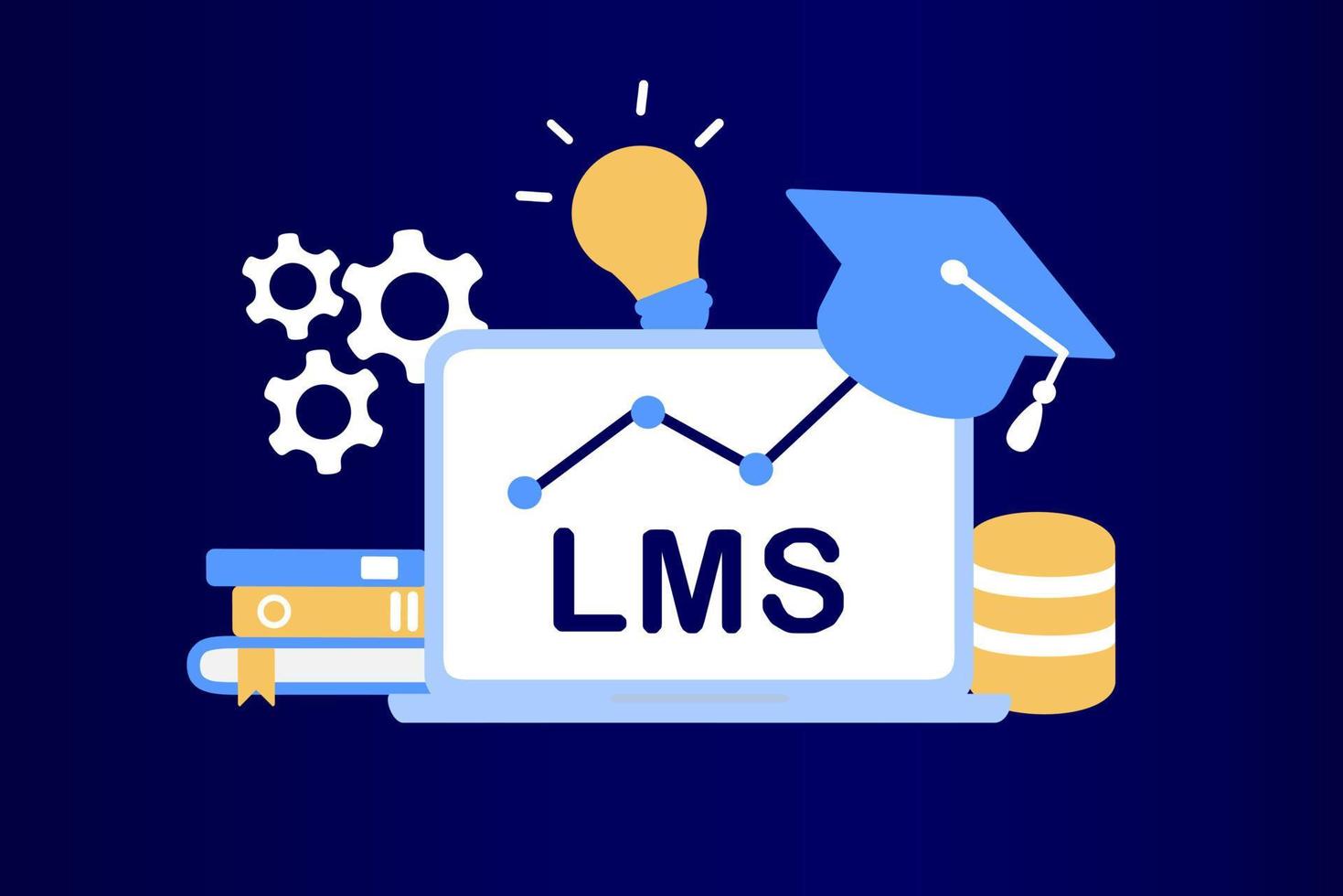
LMS (Learning Management System) is a digital platform for creating study programs, managing them, and tracking the learning process in one unified system. Simply put, it’s the place where universities and businesses create learning plans for students and employees and check how the progress is going, where learners need help, and so on.
Businesses use LMS solutions for employee onboarding, training on standards, professional development, and ongoing team development. It’s a good way to ensure a convenient learning path and awareness in business processes for all departments on the same level.
Universities and schools use LMS to handle courses, assignments, quizzes, and instructor–student communication. Modern systems also add analytics, personalized learning paths, and AI-driven features that adjust to each learner.
Ready-made LMS platforms: how they work and who they are best suited for.
Ready-made LMS platforms are those that are already built for learning, do not require LMS development, and can be launched right away when you buy them. You just sign up, set up courses, users, and roles, and start using the platform as a ready-to-use product.
Such an LMS already has its basic architecture with a standard set of features. Namely, authentication, analytics, certification, integration with video or HR systems, etc. They’re best suited for small and medium-sized businesses that want to launch training programs fast without significant development costs. They also fit startups, education providers, and companies with simple, standardized training processes.
Custom LMS development: advantages, flexibility, and business value.
Custom LMS development is when you build the whole system from scratch, put in there unique features you need, and define its interface that reflects the university or business style. This type of system is tailored to how a company or university operates: employee training, knowledge assessment, role structure, and broader business and integration goals.
Their core advantages are full freedom and flexibility in how your LMS should look like and the features it must consist of. You can realize any product logics you want – personalized learning paths powered by AI and integration with HR, CRM, or internal tools. The system evolves with the business instead of holding it back like many off-the-shelf solutions.
From the business perspective, a custom LMS provides long-term resource savings and full control over the learning process. There’s no reliance on licenses, third-party restrictions, or vendor roadmaps. Everything is built around internal processes, making training more effective and onboarding faster.
Pros and cons of ready-made LMS solutions in 2026
Ready-made LMS pros:
Quick launch without building from scratch.
Lower initial cost.
Built-in core features (courses, quizzes, certificates).
Simple administration without a technical team.
Regular updates from the provider.
Basic integrations with popular services.
Ready-made LMS cons:
Limited customization for business processes.
Difficult to scale complex or unique learning scenarios.
Dependence on the provider (pricing, roadmap, limitations).
Limitations in integrations with internal systems.
Data and logic are stored in a third-party ecosystem.
Advantages and challenges of creating your own LMS platform
Сustom LMS platform benefits:
Fully customizable to match how your company actually works.
Flexible setup, so you can add any features you need.
Easy integration with your internal tools – HR, CRM, etc.
Scales without limits or third-party restrictions.
Full control over your data and security.
Freedom to add AI and personalize your own way.
No dependence on licenses or external roadmaps.
Сustom LMS platform challenges:
Higher initial investment in development.
Time required for design and launch.
Need for a dedicated technical support team.
Responsibility for security, stability, and scalability.
Cost, scalability, and time to market: a comparison of both LMS approaches
Ready-made LMS platforms have significantly less cost at start, work on a subscription model, and help speed up time to market. Thus, you can go to the market with a new product in a few days or weeks. But there are some limitations in terms of scalability and future growth. You have to adapt to the ready-made LMS and follow its possibilities, even when you have plans to grow. In some cases, such solutions reduce opportunities for development as they dictate their own rules.
Custom LMSs require more investment at the start and a longer time for their development, design, and, accordingly, time to market. But instead, you get full freedom in customization, adding features, AI integrations, design, and everything you want to add to your LMS. Following this approach, you get unlimited scalability, flexible architecture, and a system fully tailored to your business processes without forcing technical trade-offs.
How to choose between a ready-made LMS and custom development
Start by defining what your business goals are, how complex your workflows are, and how fast you want to scale.
If you plan to grow your LMS over time and strive to pack it with unique features and brand style – go for a custom development. It supports complex roles, integration with HR/CRM/AI systems, personalized learning paths, and scaling without platform limitations.
If you need a product that just performs basic tasks for LMSs and need a faster time to market – choose ready-made solutions. This is the best option for small and medium-sized businesses, or when training is not the company’s core product.
Conclusion
Both options are workable for a specific business and perform their tasks as they should. But the core difference in the flexibility they give you once you want to add new features, design an interface, or scale it over time. Your initial goals are the answer to what to choose – custom development or a ready-made solution.
Related Reading
More contextual TechBooky stories selected from tags, categories and article context.
TechBooky Contributor is a shared editorial byline for contributed and partner articles published by TechBooky, covering technology and the digital economy.
We use cookies to ensure that we give you the best experience on our website. If you continue to use this site we will assume that you are happy with it.