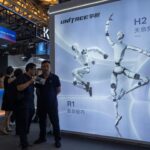
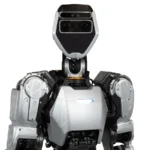
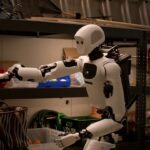
China’s robot industry has become adept at making humanoid machines dance, run and perform carefully rehearsed demonstrations. The harder commercial test is whether a robot can recognise an unfamiliar object, decide what to do next and complete a useful task without a person scripting every step.
That shift from movement to intelligence is emerging as the next contest for Chinese manufacturers, according to a Reuters report published on 2 November. Its account describes companies turning more attention to the software that links visual perception, reasoning and physical action. It is a change of emphasis, not proof that general-purpose household robots have arrived.
A demonstration can be impressive while telling buyers little about reliability. A robot in a factory, warehouse or care setting has to work around changed layouts, unexpected obstacles and objects it has not handled before. It must also do so consistently enough to justify its price and the cost of supervision. Better motors and joints remain important, but they cannot solve those problems alone.
The industry calls this embodied AI. In practical terms, it means joining sensors, control systems and AI models so a machine can perceive its surroundings and translate decisions into safe movements. Progress is difficult to judge from videos because a polished clip rarely shows failure rates, operating time or how much human assistance was needed. Those measurements will matter more to customers than another staged stunt.
The scale of the investment is striking. Citing ITjuzi data, Reuters reported that Chinese embodied-AI companies raised 93.5 billion yuan, or about $13 billion, across 322 deals in the first half of 2026. That was roughly five times the year-earlier amount. This is sector-wide investment reported by a data provider, not a single government commitment or one company’s funding round.
China has strengths in manufacturing supply chains, electric motors, batteries and hardware iteration. Investors now want to know whether software can turn that hardware advantage into dependable products. Training a robot to operate outside a narrow test environment requires varied physical data, substantial computing resources and careful safety testing. A task that works in one room may fail when the lighting, object placement or instructions change.
The near-term opportunities may therefore be more specialised than the familiar promise of an all-purpose humanoid assistant. A machine that reliably sorts parts, moves inventory or performs a defined inspection could have a clearer buyer than one advertised as able to do everything. Commercial success will depend on total cost, uptime and measurable productivity, not merely the sophistication of its AI model.
The wider AI industry is wrestling with a similar gap between eye-catching capability and sustained real-world value. TechBooky’s technology trends analysis tracks the infrastructure and adoption questions behind that shift. For robot makers, the next persuasive demonstration will be a mundane task completed repeatedly, safely and without a hidden human in the loop.
Related Reading
More contextual TechBooky stories selected from tags, categories and article context.
Paul Femi Balo is the founder and publisher of TechBooky. He covers artificial intelligence, African technology, digital infrastructure, enterprise technology and the global digital economy.
We use cookies to ensure that we give you the best experience on our website. If you continue to use this site we will assume that you are happy with it.