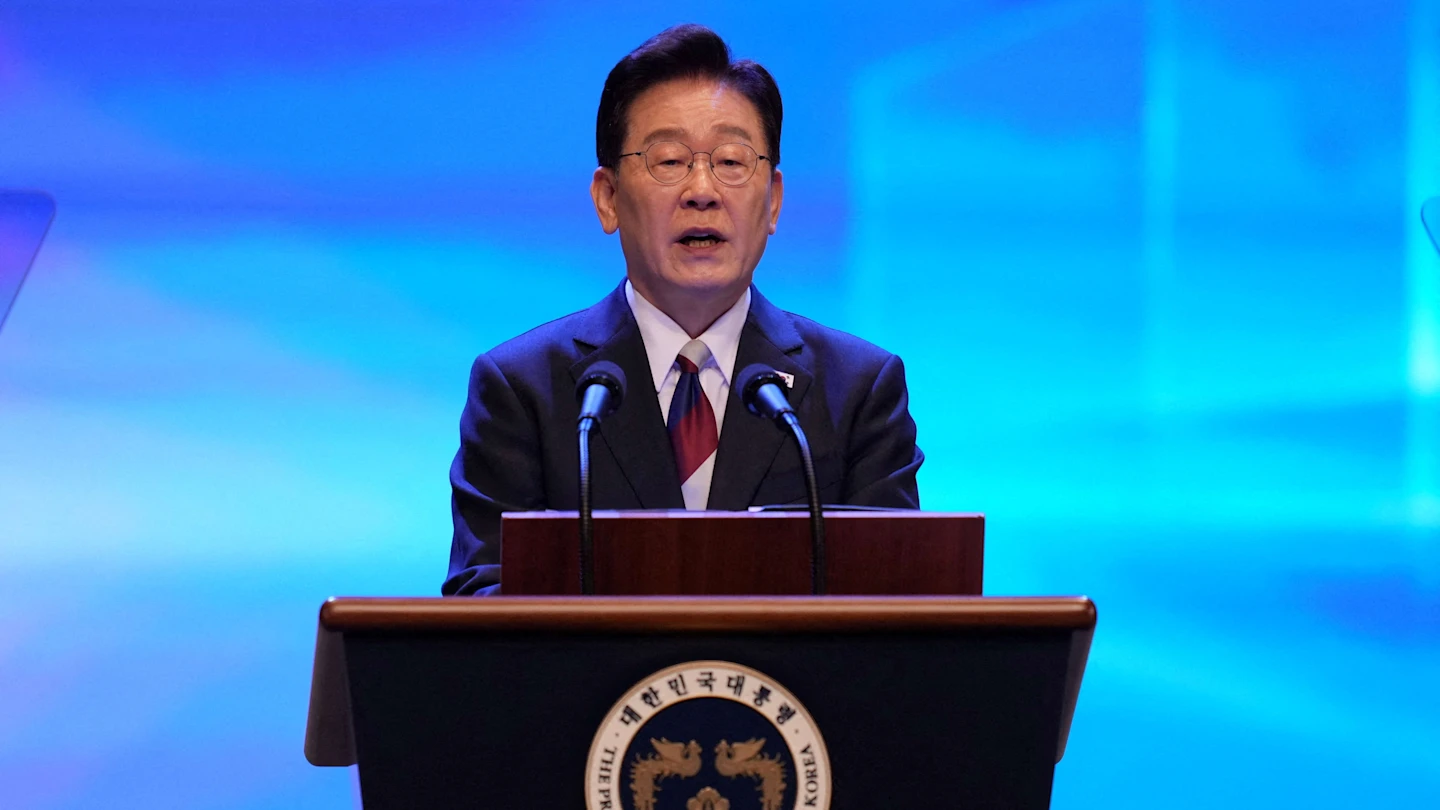
South Korea is turning the artificial intelligence chip boom into national policy. The government has unveiled a record 2027 budget plan, using stronger tax receipts from the semiconductor sector to fund a wider push into AI, chips, data centres, robotics and defence technology.
The Financial Times reported that Seoul’s spending plan rises 12.8 percent year on year to about 820.9 trillion won, or roughly $598 billion. A large part of the confidence behind that spending comes from Samsung Electronics, SK Hynix and the wider memory-chip boom created by global AI demand.
The political message is clear. South Korea does not want to be only a supplier to the AI boom. It wants to use the proceeds of that boom to strengthen the next layer of national competitiveness.
That makes sense because memory has become one of the most important bottlenecks in artificial intelligence. Training and running advanced models depends heavily on high-bandwidth memory, an area where SK Hynix and Samsung are central players. If AI demand keeps growing, South Korea is not just exporting components. It is exporting the physical foundation of the AI economy.
Recent trade numbers also show the scale of the moment. The Wall Street Journal reported that South Korea’s August exports extended chip-led growth, with chip exports tripling from a year earlier and reaching a record level. That kind of momentum gives Seoul more fiscal room, but also makes the economy more tied to one global cycle.
This is the part that should interest other countries. South Korea is showing what industrial policy looks like when a country already has deep semiconductor capability. It can take gains from Samsung and SK Hynix, then reinvest them into AI infrastructure and future industries. Many countries talk about AI sovereignty. South Korea has the chip supply chain to make that conversation practical.
The contrast with China is useful. Huawei is spending heavily to build around U.S. restrictions, and its recent profit pressure shows how costly AI chip self-reliance can be. South Korea, by contrast, is trying to expand from a position of strength inside the existing global chip system.
There are risks. A record budget built partly on semiconductor strength assumes the AI boom remains durable. Memory cycles can turn, prices can fall, export demand can weaken and geopolitical tensions can affect supply chains. A country that benefits from an AI surge can also feel the pain if that surge slows.
Still, the strategy is hard to dismiss. AI is no longer only a software race. It is a race for power, chips, memory, skilled engineers, data centres and government backing. South Korea is using the current boom to prepare for that reality.
For Africa and other emerging regions, the lesson is not to copy South Korea’s semiconductor model overnight. It is to understand that AI readiness is built through infrastructure, not speeches. Compute, energy, cloud, skills and financing will decide who participates in the AI economy and who mostly consumes it.
Related Reading
More contextual TechBooky stories selected from tags, categories and article context.
Paul Balo is the founder of TechBooky and a highly skilled wireless communications professional with a strong background in cloud computing, offering extensive experience in designing, implementing, and managing wireless communication systems.
We use cookies to ensure that we give you the best experience on our website. If you continue to use this site we will assume that you are happy with it.