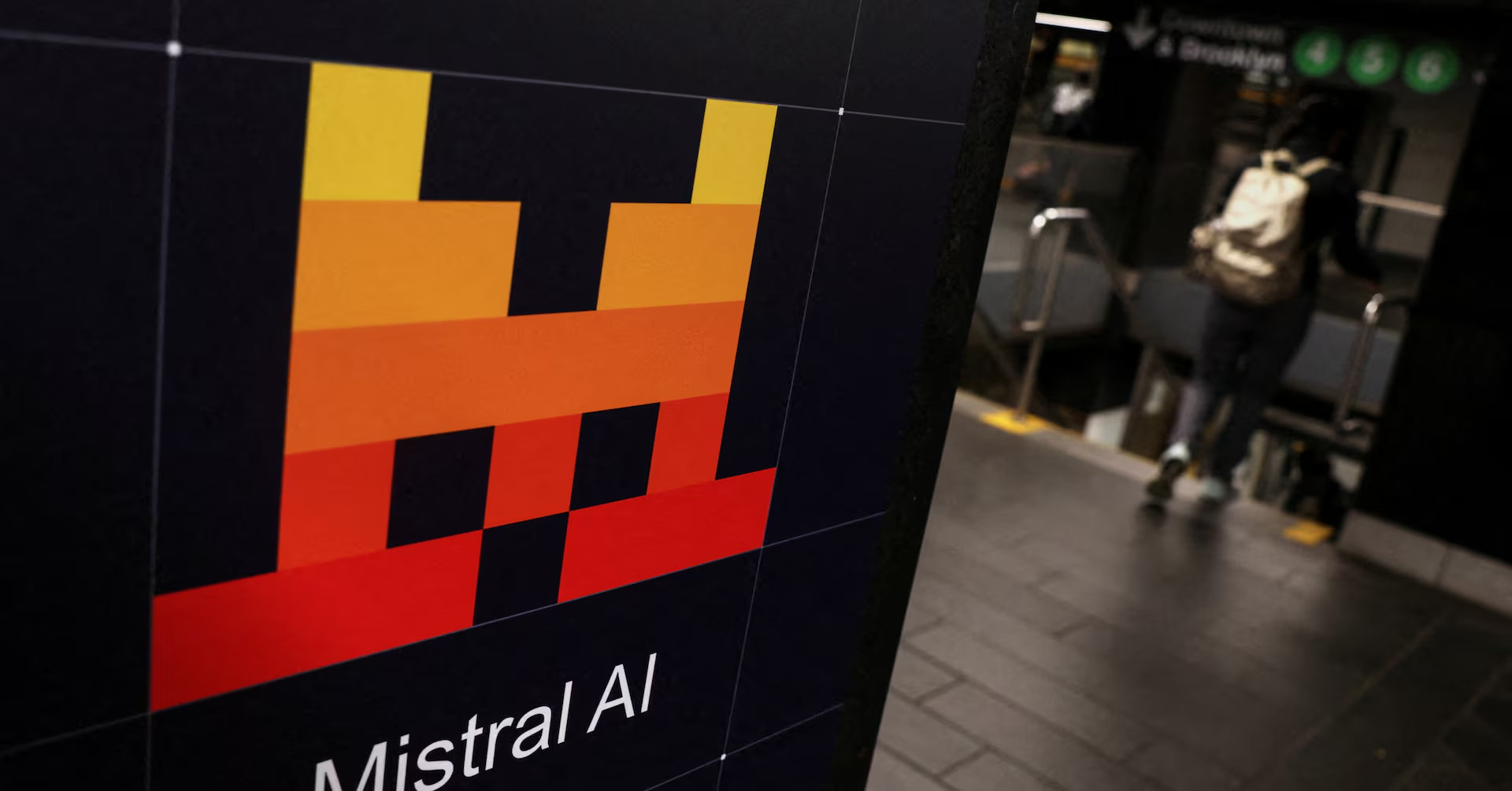
Cote d’Ivoire is turning to Mistral AI as it tries to move artificial intelligence from policy language into practical public-sector use. The partnership is designed to audit the country’s digital ecosystem and identify where AI can be deployed in areas such as public administration, health, education and agriculture, according to fresh regional coverage of the agreement.
The move matters because African governments are no longer talking about AI only as a future technology. They are beginning to ask where it can fit inside state systems, service delivery and national competitiveness. Tech Review Africa also reported that the partnership is tied to national priorities and the country’s wider digital transformation agenda.
Mistral AI gives the story a different flavour. The French company has positioned itself as one of Europe’s most important AI players, offering an alternative to the US-led model ecosystem dominated by OpenAI, Google, Anthropic and Meta. For Cote d’Ivoire, working with Mistral may be about technology, but it is also about geopolitical choice.
That is why this connects with the wider African AI sovereignty debate. If countries simply import models and tools built elsewhere, they may gain short-term efficiency but lose control over data, language, public-sector priorities and long-term capability. That concern is similar to the point raised in Nigeria’s own debate around AI sovereignty and sovereign cloud infrastructure .
Cote d’Ivoire’s immediate focus appears practical. Public administration can use AI to speed up services, classify documents, improve citizen support and reduce paperwork. Health systems can use it for triage, planning and medical data analysis. Education can use it for teacher support and personalised learning. Agriculture can use it for advisory services, weather risk and productivity tools.
But the hard part is not announcing AI use cases. The hard part is building systems that are accurate, secure, affordable and trusted. Government AI tools touch sensitive data and public rights, which means mistakes can have consequences far beyond a bad chatbot answer. Procurement, data protection, auditability and local oversight will matter as much as model performance.
The African Development Bank has already backed digital public administration efforts in Cote d’Ivoire, including initiatives designed to modernise service delivery and improve access to digital government. That broader push gives the Mistral partnership a clearer context: AI is being added to a state digitisation agenda that was already under way.
This is also where international partnerships must be judged carefully. As Korea-Africa digital infrastructure talks show, African countries are looking for partners that can help build capacity. The best partnerships transfer skills, improve infrastructure and leave local institutions stronger. The weaker ones simply create new dependencies under a modern AI label.
Cote d’Ivoire’s Mistral AI partnership is therefore worth watching. It could become a practical step toward locally useful AI in government and key sectors. Or it could become another policy announcement that sounds bigger than its implementation. The difference will be whether the country can turn the audit into real tools, real safeguards and real local capability.
Related Reading
More contextual TechBooky stories selected from tags, categories and article context.
Paul Balo is the founder of TechBooky and a highly skilled wireless communications professional with a strong background in cloud computing, offering extensive experience in designing, implementing, and managing wireless communication systems.
We use cookies to ensure that we give you the best experience on our website. If you continue to use this site we will assume that you are happy with it.