One of the most interesting AI stories out of Africa this week is not another model leaderboard. It is a problem anyone who lives on the continent understands immediately: people do not speak in neat single-language boxes.
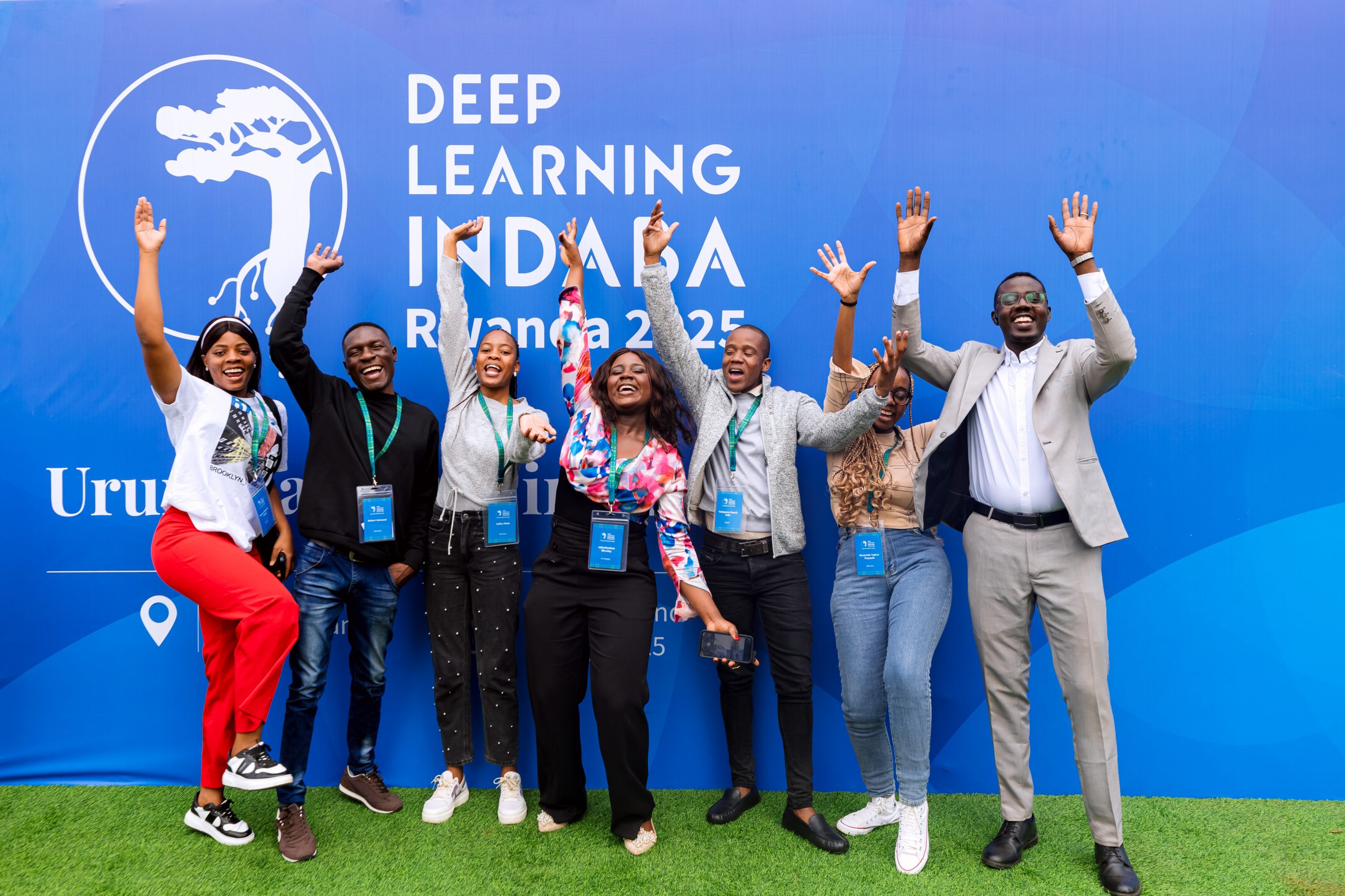
At Deep Learning Indaba 2026 in Lagos, teams are taking on Africa’s code-switching problem, the everyday habit of moving between languages in the same conversation or even the same sentence. A person might begin in English, switch to Yoruba, add Pidgin, return to English and still expect the listener to understand everything naturally. Humans do. Most voice AI systems still struggle.
The new Sahara CodeSwitch Africa Challenge is giving developers access to code-switching speech APIs and African datasets so they can build voice applications that reflect how people actually speak. TechCabal says 97 teams are participating, while the challenge material frames the work around voice-driven agentic apps for sectors such as healthcare, finance, telecoms, education, agriculture, public services and accessibility.
This matters because voice AI is one of the most practical ways to bring digital services to people who may not want to type, may not read comfortably in a dominant language or may simply prefer speaking. But if the system breaks whenever a user mixes English with Hausa, French with Wolof, Swahili with Sheng or local languages with Pidgin, then the product is not really built for the market.
The challenge asks participants to use voice as the main interface for real downstream tasks, benchmark different speech models and test Sahara APIs against African code-switching data. The workshop page also references an AfriSwitch benchmark dataset and public evaluation framework, which is important because African AI needs more than demos. It needs shared tests that make progress measurable.
Code-switching is a hard technical problem because it mixes low-resource languages, accents, local pronunciation, borrowed words and fast informal speech. A speech model trained mostly on English or standard French may mishear names, switch points, slang and context. In customer service, that leads to bad answers. In healthcare, banking or public services, it can become exclusionary.
Deep Learning Indaba itself has become one of the continent key AI gatherings. Google Research and Google DeepMind are also at the 2026 event in Lagos, which runs from August 2 to August 7 at Pan-Atlantic University, with sessions around machine learning research, responsible AI, agentic systems and African applications. That kind of gathering matters because the talent is already here. The missing pieces are often compute, data, funding and long-term product support.
The commercial angle is also clear. Banks, telcos, clinics, insurers and government agencies across Africa all want cheaper and more scalable ways to serve customers. Voice agents could help, but only if they understand the way customers speak on a normal day. That is a different challenge from building a chatbot that sounds impressive in a lab.
The best part of this story is that it feels rooted in a real African problem rather than a borrowed Silicon Valley obsession. Code-switching is not a niche edge case here. It is the default mode of communication for millions of people. If African developers can build reliable voice AI around that reality, the continent will not just consume global AI tools. It will improve them.
Related Reading
More contextual TechBooky stories selected from tags, categories and article context.
Paul Balo is the founder of TechBooky and a highly skilled wireless communications professional with a strong background in cloud computing, offering extensive experience in designing, implementing, and managing wireless communication systems.
We use cookies to ensure that we give you the best experience on our website. If you continue to use this site we will assume that you are happy with it.