With the debut of the Nemotron 3 family of open models and the acquisition of SchedMD, the company responsible for the widely used Slurm workload management system, Nvidia is making a strong move into open source AI. The simultaneous actions reveal Nvidia’s plan to take control of the crucial software infrastructure that developers rely on to train and deploy AI systems at scale, in addition to the processors that fuel AI.
To function effectively, Nvidia says AI agents need the ability to coordinate and operate across wide contexts and extended periods, necessitating an open infrastructure approach.
With the introduction of the Nemotron 3 family of open models, which offer a basis for businesses to create their own domain-specific AI agents, Nvidia is “betting on open infrastructure for the agentic AI era”.
Two channels are being used by Nvidia to transfer power. The semiconductor giant revealed on Monday that it had purchased SchedMD, the organisation in charge of Slurm, the open-source workload management system that has been operating covertly behind the scenes in almost all AI data centres, research facilities, and university labs since 2002.
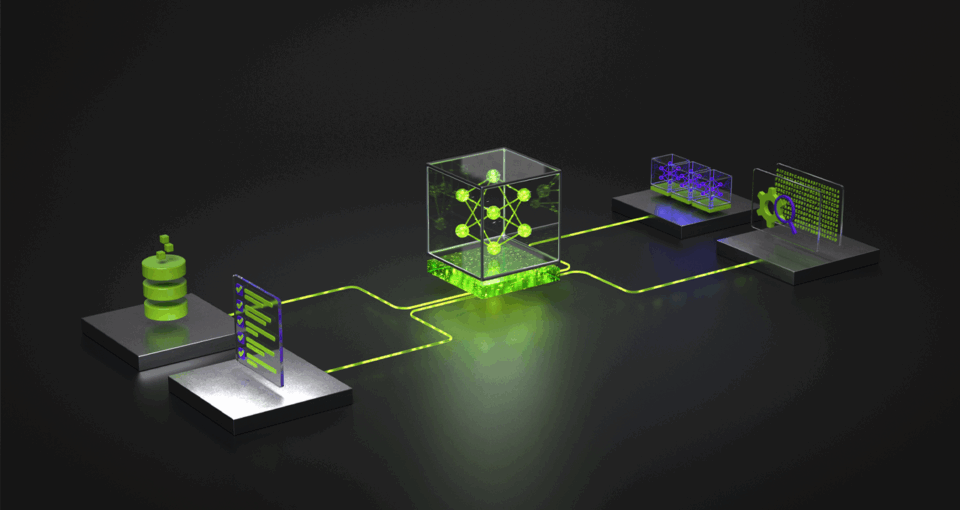
One of those unglamorous but vital pieces of infrastructure that enable modern computing is Slurm. It determines which jobs run when and where by scheduling and managing computational resources across machine clusters. It has become crucial in the AI era for coordinating large-scale inference workloads and training sessions. The original creators of Slurm, Morris Jette and Danny Auble, formed SchedMD in 2010; Auble is presently the CEO.
Nvidia showed a strong commitment but refused to reveal the parameters of the agreement. The business stated on a blog post that it has been working with SchedMD for over ten years and sees Slurm as essential infrastructure for generative AI in its blog post announcing the acquisition.
Nvidia pledged to maintain the software’s vendor neutrality and open source status while speeding up development and increasing system compatibility. This is significant because it indicates that Nvidia is not explicitly locking Slurm into its ecosystem, which would have caused a significant backlash from the research and academic computing communities that rely on it.
But there is more to the tale than just the SchedMD acquisition. Nemotron 3, a new collection of open-source AI models that Nvidia says is the most effective suite for creating AI agents, was introduced on the same day. This indicates the direction Nvidia believes AI will take as well as the skills developers truly require.
There are three varieties in the Nemotron 3 series, each intended for a distinct function. Nemotron 3 Nano focusses on specific applications where it makes sense to employ smaller models for more effective inference. Nemotron 3 Super was created especially for multi-agent systems in which various AI models must cooperate and coordinate. Nemotron 3 Ultra manages the more demanding tasks for intricate applications that call for more advanced logic.
Nvidia CEO Jensen Huang stated, “Open innovation is the foundation of AI progress,” at the announcement. “With Nemotron, we’re transforming advanced AI into an open platform that gives developers the transparency and efficiency they need to build agentic systems at scale.” The final section is important.
In particular, Huang is criticising agentic systems—autonomous AI agents capable of job execution, planning, and iteration without continual human supervision. Nvidia believes that’s where the next generation of worthwhile AI applications will go.
Nvidia has recently made several open source initiatives. The company just released Alpamayo-R1, an open reasoning vision language model with an emphasis on autonomous driving research, last week. In order to assist developers in creating tangible AI applications, it also released additional procedures and guidance for its Cosmos world models. These actions are a component of a well-planned strategy.
This pattern is informative on a larger scale. Nvidia is placing a significant wager that the next frontier for GPU deployment will be physical AI, which includes robotics and self-driving cars that must comprehend and interact with the actual world. Nvidia is seeding the ecosystem with models, tools, and now essential infrastructure software instead of waiting for businesses to figure out how to use its GPUs for these applications. It aspires to be the essential provider for the complete stack, not just the processors, since businesses need to create the intelligence systems that will drive robots and self-driving cars.
Nvidia has direct control over the scheduling and resource allocation of AI workloads thanks to its acquisition of SchedMD.
By releasing open models such as Nemotron 3, it provides developers with easily available tools to enhance Nvidia hardware. It’s a potent combo. Free, effective models that perform well on Nvidia GPUs and run on infrastructure built to maximise Nvidia chip consumption are made available to developers. Under the pretext of open innovation, this is vertical integration.
The action exerts pressure on the other players in the stack. The most powerful semiconductor business now supports a well-established, free alternative to proprietary workload management technologies. While celebrating Nvidia’s dedication to open models, proponents of open source may overlook the fact that Nvidia is actively leveraging openness to gain an edge. On the model and infrastructure fronts, rivals like AMD and Intel are forced to catch up.
Nvidia is doing more than just launching a new product and making a wise acquisition. The company is implementing a thorough strategy to own the most important levels of the AI stack, from the silicon to the models used by developers and the infrastructure that powers them. Nvidia is making it more difficult for anyone to create significant AI systems without utilising Nvidia technology at several levels by fusing open source idealism with strategic control. This makes Nvidia infrastructure less of an option and more of a necessity for developers and businesses creating physical AI applications.
This action, which is part of a larger plan to speed up the development of agentic AI systems and physical AI like robotics and autonomous driving, is perceived as Nvidia’s reaction to the growth of open-source solutions from other laboratories, especially Chinese companies like DeepSeek.
Related Reading
More contextual TechBooky stories selected from tags, categories and article context.
We use cookies to ensure that we give you the best experience on our website. If you continue to use this site we will assume that you are happy with it.