There are wealthy entrepreneurs, there are billionaires, and then there is trillionaire Elon Musk.
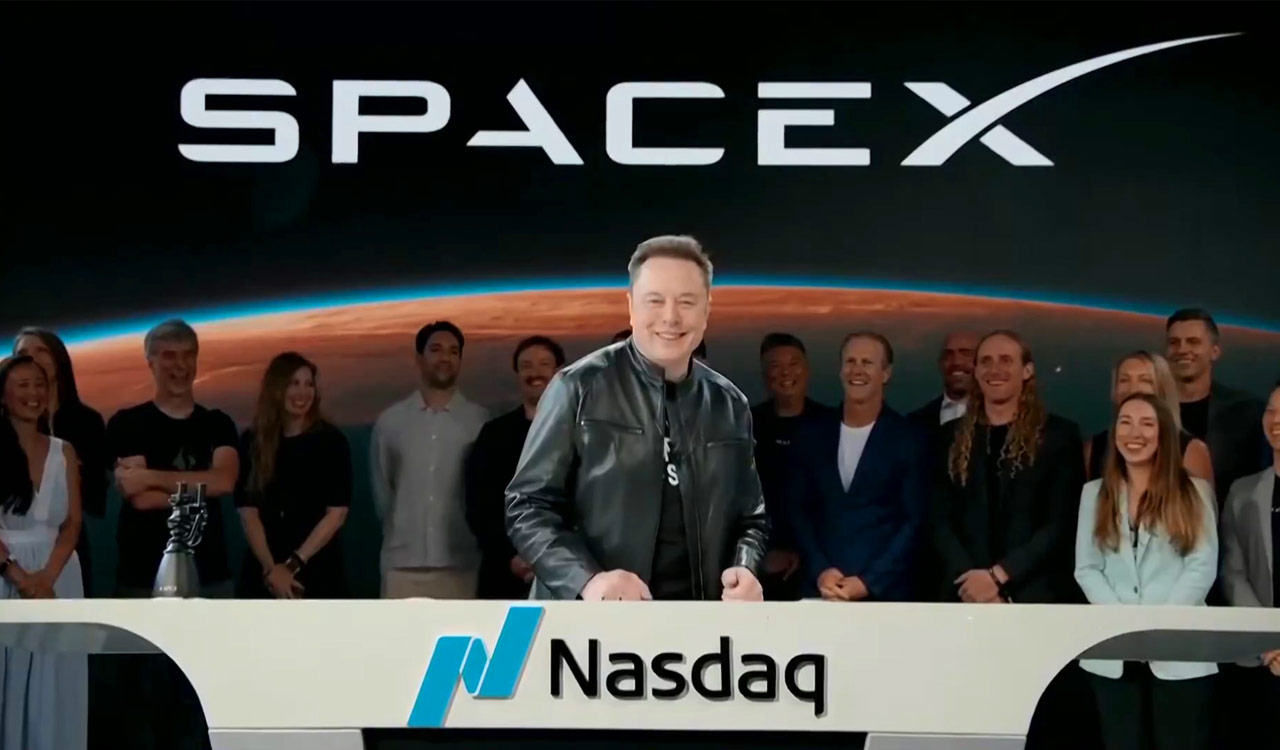
The world’s richest businessman has reportedly become the first person in modern history to surpass a net worth of $1 trillion after SpaceX’s blockbuster stock market debut pushed the company’s valuation beyond $2 trillion.
The historic milestone marks a moment that would have sounded absurd just a decade ago. Back then, SpaceX was still proving the viability of reusable rockets, Tesla was battling production challenges, and the idea that a private entrepreneur could accumulate wealth measured in trillions rather than billions seemed almost impossible.
Today, that future appears to have arrived.
SpaceX’s debut on public markets has ignited investor enthusiasm on a scale rarely seen before. Strong demand for shares sent the company’s valuation soaring beyond the $2 trillion mark, instantly placing it among the most valuable corporations ever created and transforming Musk’s personal fortune in the process.
According to estimates circulating among market analysts following the listing, Musk’s combined holdings across SpaceX, Tesla, xAI, X, Neuralink, The Boring Company and other ventures have pushed his wealth to approximately $1.1 trillion, making him the first known trillionaire in history.
While Tesla made Musk famous, many investors now believe SpaceX may ultimately become the most valuable company he has ever built.
The company has evolved far beyond launching rockets.
Today, SpaceX operates one of the world’s most advanced launch systems, serves government and commercial customers globally, and runs Starlink, a satellite internet network that has become a critical communications platform across multiple continents.
The combination of recurring subscription revenue from Starlink, growing government contracts, defense partnerships, launch services and future space infrastructure projects has convinced investors that SpaceX is no longer simply an aerospace company.
Many now see it as a foundational technology platform that could influence communications, artificial intelligence infrastructure, defence systems and eventually human expansion beyond Earth.
That vision is what investors are buying.
The emergence of a trillionaire reflects how dramatically technology has reshaped wealth creation over the last two decades.
Not long ago, becoming a billionaire represented the pinnacle of entrepreneurial success.
Then came the era of mega-cap technology companies.
Founders such as Bill Gates, Jeff Bezos, Larry Page, Sergey Brin, Mark Zuckerberg and Elon Musk accumulated fortunes that crossed the $100 billion mark as their companies transformed global industries.
Now, Musk appears to have broken through another financial ceiling altogether.
To put the scale into perspective, a fortune of $1.1 trillion is larger than the annual economic output of many countries and exceeds the market value of most publicly traded corporations around the world.
Whether the exact number fluctuates in the coming weeks is almost beside the point.
The symbolic significance is enormous.
For the first time, an individual has accumulated wealth measured in trillions.
The enthusiasm surrounding SpaceX stems from the belief that the company sits at the centre of several major technological shifts.
Satellite internet is becoming increasingly important as governments and businesses seek resilient global connectivity.
Artificial intelligence requires vast amounts of computing infrastructure and network capacity.
Defense agencies are investing heavily in next-generation communications and launch capabilities.
At the same time, SpaceX continues developing Starship, the massive launch vehicle designed to reduce the cost of space transportation and eventually support missions to the Moon and Mars.
For investors, these opportunities represent markets worth hundreds of billions or even trillions of dollars over the coming decades.
Despite the excitement, some analysts remain cautious.
A $2 trillion valuation implies extraordinary future growth and leaves little room for execution mistakes.
Critics argue that SpaceX still faces substantial technological, regulatory and operational challenges. Others question whether current revenues can justify such an ambitious valuation.
History, however, suggests that Musk has often thrived when critics underestimated the scale of his ambitions.
Tesla was once dismissed as a niche electric vehicle startup.
Reusable rockets were widely considered impractical before SpaceX demonstrated otherwise.
Starlink was viewed by many as an expensive experiment before becoming one of the world’s largest satellite internet networks.
Whether SpaceX ultimately justifies its valuation remains an open question.
The most remarkable aspect of this story may not be that SpaceX has become a $2 trillion company.
It may be that public markets are increasingly willing to place trillion-dollar bets on technologies that are still shaping the future.
Investors are no longer valuing SpaceX solely based on rockets, satellites or current earnings.
They are valuing a vision. A vision of global internet coverage from space. A vision of AI-powered infrastructure connected across continents. A vision of permanent human presence beyond Earth.
And with SpaceX now worth more than $2 trillion and Elon Musk reportedly worth over $1.1 trillion, it is clear that investors believe that vision is only beginning.
Related Reading
More contextual TechBooky stories selected from tags, categories and article context.
Paul Balo is the founder of TechBooky and a highly skilled wireless communications professional with a strong background in cloud computing, offering extensive experience in designing, implementing, and managing wireless communication systems.
We use cookies to ensure that we give you the best experience on our website. If you continue to use this site we will assume that you are happy with it.