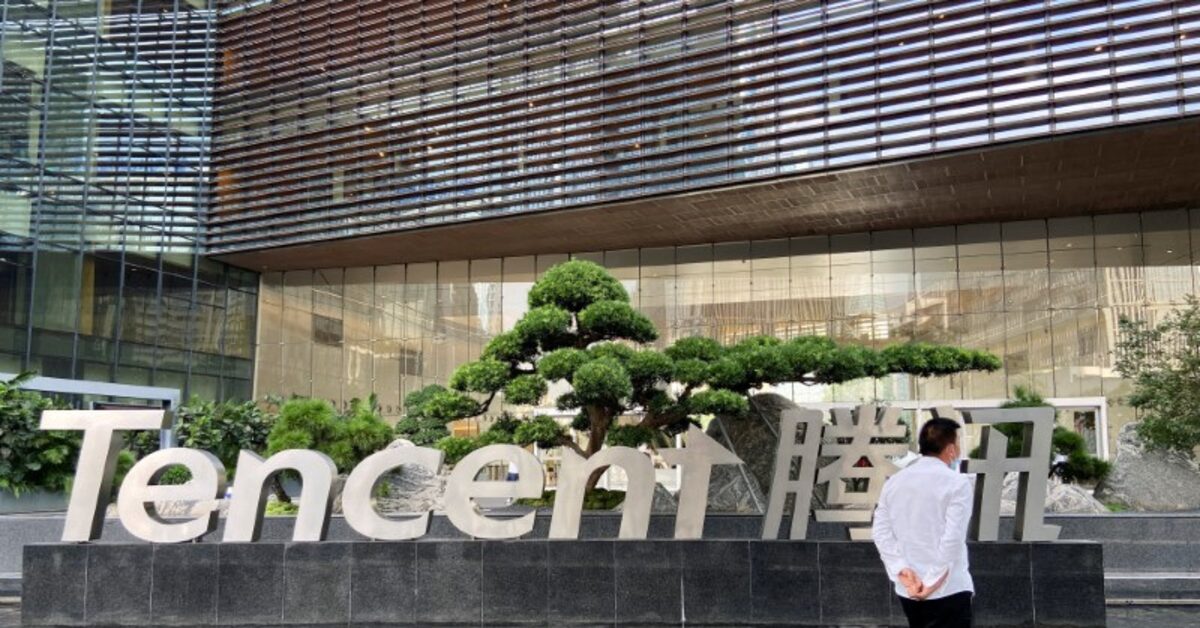
Tencent’s latest earnings show that China’s biggest internet companies are facing the same uncomfortable AI trade-off as U.S. Big Tech: spend heavily now, explain the returns later.
In its second-quarter results, Tencent reported revenue of RMB204.8 billion, up 11 percent year-on-year. Gross profit rose 13 percent, non-IFRS operating profit rose 9 percent, and marketing services revenue climbed 22 percent, helped by AI-driven ad targeting and campaign tools.
The pressure point was AI infrastructure. Tencent said capital expenditure rose 176 percent year-on-year to RMB52.8 billion, about $7.8 billion, as it substantially increased procurement of compute. The company also reported negative free cash flow of RMB13.8 billion for the quarter because operating cash flow was more than offset by capex, content payments and lease liabilities.
That is a familiar pattern. Google, Meta, Microsoft, Amazon and OpenAI are all spending heavily on data centres, chips, networking and power because frontier AI and large-scale AI services require physical infrastructure. Tencent’s results show that Chinese platforms are now living in the same capital cycle.
Tencent says the spending is meant to convert usage of its AI applications and models into future revenue. The company pointed to its Hy family of models, Yuanbao, WorkBuddy, CodeBuddy and Xiaowei as part of its AI product push. It also said WorkBuddy and CodeBuddy are seeing breakout user growth and are clear leaders in their fields in China today, based on monthly interactions.
That product mix is important because Tencent is not only building an AI lab. It has WeChat, gaming, payments, cloud services, advertising, enterprise software and a giant consumer internet ecosystem. If AI can make ads more efficient, improve gaming tools, strengthen cloud demand and create office-productivity habits, Tencent may be able to justify the spending better than a pure AI startup.
Still, investors will watch the cash flow. AI capex can look strategic when growth is strong, but it can quickly become uncomfortable if returns are delayed. The same debate is happening around U.S. tech companies. The market wants AI leadership, but it also wants proof that infrastructure spending will produce durable revenue rather than just larger depreciation bills.
This also connects to our recent argument that China could still win parts of the AI race if it combines cheaper models, strong engineering and domestic demand. Tencent’s spending shows that lower-cost models do not remove the need for compute. They may only change where and how that compute is used.
Tencent still has strong core businesses. Games, WeChat advertising and fintech services remain powerful engines. The question is whether AI becomes another layer of growth on top of those businesses or a cost centre that takes years to mature. Q2 suggests both things are true at once. Tencent is making money, but AI is making the money more expensive to defend.
Related Reading
More contextual TechBooky stories selected from tags, categories and article context.
Paul Balo is the founder of TechBooky and a highly skilled wireless communications professional with a strong background in cloud computing, offering extensive experience in designing, implementing, and managing wireless communication systems.
We use cookies to ensure that we give you the best experience on our website. If you continue to use this site we will assume that you are happy with it.