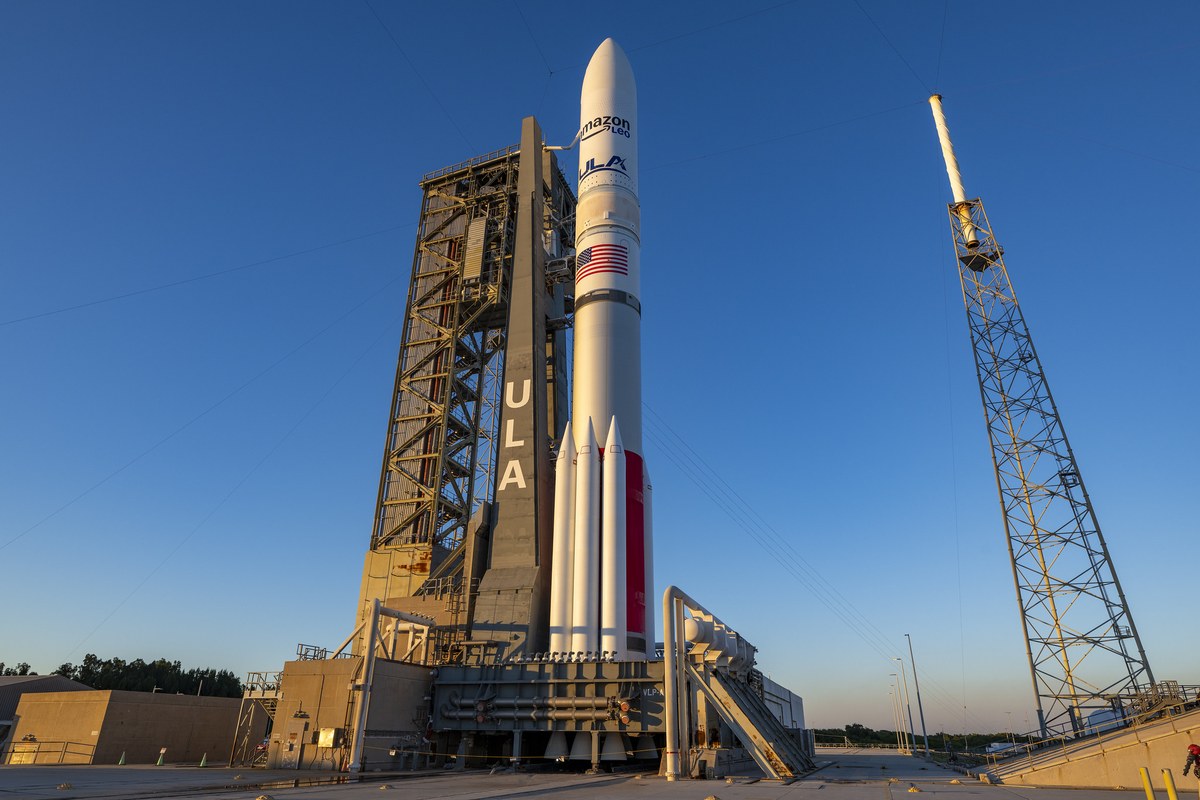
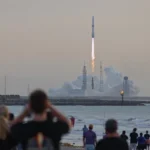
Amazon has lost a planned batch of 40 Leo broadband satellites after a United Launch Alliance (ULA) Vulcan rocket failed to deliver them to orbit on Sunday, 15 November. ULA said the vehicle suffered an anomaly about 10 minutes into the flight from Cape Canaveral, Florida. The company has not yet announced a cause.
The mission was the first Vulcan launch for Amazon Leo, Amazon’s low-Earth-orbit internet network. It was also intended to be the largest single batch of Amazon satellites launched to date. ULA and Amazon must now investigate the failed flight and assess its effect on later missions, rather than assuming the full launch schedule can continue unchanged.
According to ULA’s statement reported by CBS News, the anomaly occurred around 10 minutes after liftoff and the rocket failed to place the Amazon payload in orbit. The public statement establishes the mission failure, but not its technical cause. Claims that a particular engine, booster or upper-stage component was responsible remain speculative until investigators publish evidence.
The launch had a new configuration for Amazon’s needs. ULA said Vulcan carried six solid rocket boosters and a shorter Centaur V upper stage optimised for low-Earth orbit. The vehicle was meant to place the satellites in a coordinated orbital plane, where they could join Amazon’s growing constellation. The mission page says Amazon has booked 38 Vulcan launches as part of its expansion.
Amazon Leo is designed to deliver broadband to households, businesses and public services in places where conventional networks are weak or unavailable. It is Amazon’s answer to an increasingly crowded satellite-internet market led by SpaceX’s Starlink. Every failed launch removes hardware from the near-term deployment plan and can delay the point at which a network has enough coverage and capacity to serve more customers.
That does not mean the whole Leo programme has stopped. Amazon has used other rockets for previous satellite deployments, and ULA had already completed eight Amazon missions with Atlas V, according to its mission briefing. The immediate question is how quickly ULA can establish the cause, implement any fix and resume Vulcan flights. Amazon will also need to decide whether its other launch partners can absorb any resulting gap.
The setback comes as Amazon is broadening its satellite ambitions. TechBooky recently covered the approved Globalstar deal, which concerns a different satellite-to-phone opportunity. The Leo launch failure does not change that agreement, but it underlines the execution risk in building a large space-based network.
For customers, there is no announced change to service terms from this single flight. For investors and launch partners, the key dates are the investigation findings, any revised Vulcan manifest and Amazon’s next confirmed deployment. Until those are published, the 40-satellite loss is clear, while the longer-term timetable remains uncertain.
Related Reading
More contextual TechBooky stories selected from tags, categories and article context.
Paul Femi Balo is the founder and publisher of TechBooky. He covers artificial intelligence, African technology, digital infrastructure, enterprise technology and the global digital economy.
We use cookies to ensure that we give you the best experience on our website. If you continue to use this site we will assume that you are happy with it.