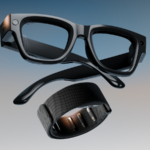
Meta has spent years trying to make virtual reality feel less like putting a machine on your head. At its September 23 Connect event, it introduced Meta VR Glasses, a roughly 100-gram device that looks more like oversized eyewear than a conventional headset. It is due in spring 2027 for $1,299.99 in the United States.
That weight is the headline, but the way Meta reached it matters. The glasses contain the display and sensors; a separate puck clipped to a pocket or bag supplies computing power, storage and battery through an optical tether. That keeps weight off the face, although anyone considering them for daily use will need to decide whether a cable and a second device are a fair trade.
Inside are micro-OLED panels that Meta calls a 5K Infinite Display, with a claimed 37 pixels per degree. Dolby Vision and Dolby Atmos are part of the entertainment pitch. The Snapdragon Reality Elite processor sits in the puck, while Meta says the battery can provide up to three hours of continuous high-resolution media playback and supports 45W charging. Those are company specifications, not independently tested results.
Meta wants the glasses to serve as a private cinema, a courtside seat and a portable workspace. It says the device will be IMAX Enhanced certified, support selected 3D films and offer more than 100 immersive live US sports events a year through partners. It also promises several virtual screens, full-colour passthrough to see your surroundings, and a way to use a flat surface as a keyboard and touchpad. A library of more than 75 hand-tracked games is planned for launch.
The timing of individual films, services and sports rights deserves attention. Some experiences announced alongside the glasses begin on Quest before the new device reaches buyers, while availability varies by country. A film catalogue that sounds broad at a launch presentation can feel much narrower once regional licensing comes into view.
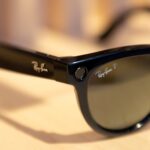
Meta also says users will be able to control the interface with voice, gaze and hand gestures, with its AI agent built into the operating system. A hologram video-calling feature is planned. This is a different proposition from the camera-and-audio Ray-Ban Meta smart glasses already on sale, and the price puts it in a different buying category too.
The real test will come when people can wear the glasses for a full movie, work session or game, not just a short demonstration. Comfort, readable text, the tether and battery life will matter more than the novelty of the shape. Snap is also pushing expensive display glasses, so Meta is entering a market where the technology is impressive but the everyday reason to buy is still being proved.
Related Reading
More contextual TechBooky stories selected from tags, categories and article context.
Paul Balo is the founder of TechBooky and a highly skilled wireless communications professional with a strong background in cloud computing, offering extensive experience in designing, implementing, and managing wireless communication systems.
We use cookies to ensure that we give you the best experience on our website. If you continue to use this site we will assume that you are happy with it.