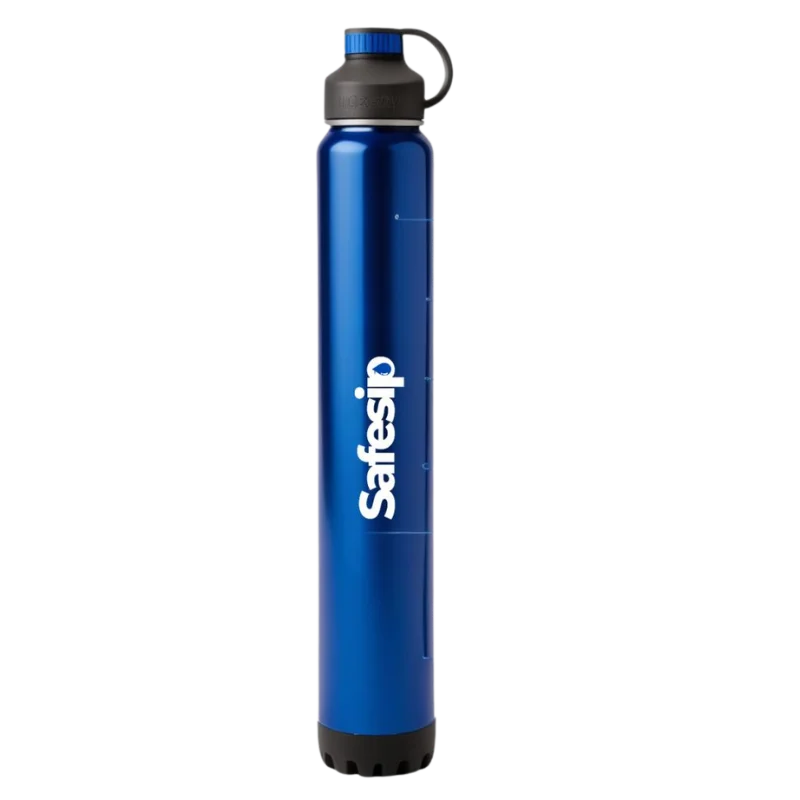
SafeSip is built around a simple but important argument that clean water access should not depend only on charity, emergency projects or broken hand pumps. It should work like service infrastructure that communities can rely on and pay for sustainably.
The Tanzanian startup was shortlisted for the 2026 Africa Prize for Engineering Innovation, with its model built around solar-powered water kiosks that purify and dispense safe drinking water in underserved communities. SafeSip says its solution has contributed to a 30 percent reduction in waterborne diseases and a 43 percent drop in diarrhoea cases in served areas.
The important part of the model is not just filtration. It is distribution. Many water projects fail because they are treated as one-time installations. A borehole is drilled, a pump is installed, photos are taken and then maintenance becomes somebody else problem. SafeSip is trying to make the service ongoing, local and accountable.
That matters because Africa water-access problem is partly technical and partly operational. Purification technology exists. Solar power exists. Mobile payments exist. The harder question is how to make the system affordable, maintained and trusted in communities where household income is limited and public infrastructure is uneven.
SafeSip model appears to treat water like a local utility. Communities get access to treated drinking water through kiosks, while the business has an incentive to keep the system running because service continuity is how it earns trust and revenue. That is different from aid-first models that may solve installation but not long-term maintenance.
The timing is relevant. Climate stress, urban growth and infrastructure gaps are making water access more urgent across the continent. Tanzania has faced water-pressure and drought-related challenges, while many African communities still rely on unsafe sources or spend significant time and money finding clean water.
There is a technology story here, but it is not flashy. Solar purification, sensors, mobile payments, route planning and kiosk management are useful only if they produce dependable access. In African infrastructure, the most important innovation is often not the device. It is the business model that keeps the device working after year one.
SafeSip still has to prove scale. Water service depends on local operations, maintenance teams, spare parts, pricing, community adoption and partnerships with schools, clinics or local authorities. Expansion will require capital, discipline and a model that can work in different regions with different water-quality problems.
But the core idea is strong. Africa does not need every water solution to be framed as aid. It needs more services that are affordable enough for communities, resilient enough to last and accountable enough to repair quickly. SafeSip is worth watching because it treats clean water not as a campaign, but as infrastructure.
Related Reading
More contextual TechBooky stories selected from tags, categories and article context.
Paul Balo is the founder of TechBooky and a highly skilled wireless communications professional with a strong background in cloud computing, offering extensive experience in designing, implementing, and managing wireless communication systems.
We use cookies to ensure that we give you the best experience on our website. If you continue to use this site we will assume that you are happy with it.