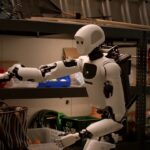
The most practical version of humanoid robotics may not arrive first as a complete human-shaped worker walking across a factory floor. It may arrive as the brain and hands, plugged into machines that already exist.
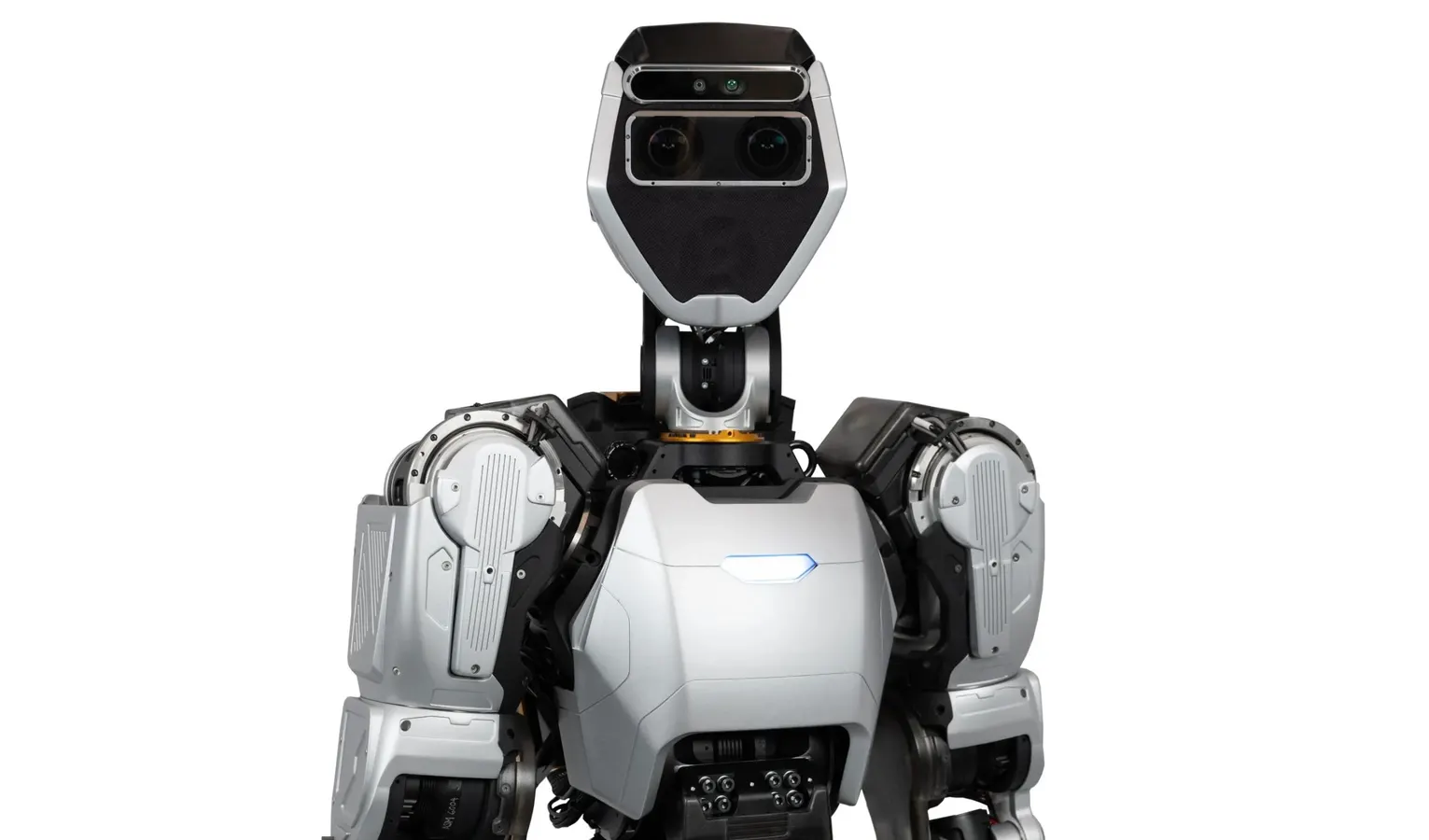
That is the important lesson from Sanctuary AI’s latest robotics push. The company has been drawing fresh attention after Forbes revisited its industrial strategy, built around deploying Physical AI on existing factory robots rather than waiting for full humanoid bodies to become commercially ready.
Sanctuary first announced in June that its system achieved a 99.5 percent-plus success rate on a complex automotive wire-plugging task for a global Tier 1 supplier, with a 2.54-second cycle time validated against the customer’s live production benchmarks. The task involved inserting flexible wired plugs into moving targets, a job the company says traditional automation had struggled to handle.
The interesting part is what was missing: the full humanoid. Sanctuary used robotic hands and its control system, not the entire Phoenix humanoid platform. That choice says a lot about where robotics may commercialize first. Factories do not necessarily need a walking robot if a dexterous AI control stack can make existing industrial robots more useful.
This is a more sober robotics story than the usual humanoid hype. A full humanoid robot has to solve locomotion, balance, manipulation, navigation, safety, endurance, maintenance and cost all at once. A robot brain attached to a narrower factory task has a clearer path to value. It can be measured against cycle time, defect rate, intervention rate and return on investment.
Humanoid Guide notes that the automotive installation remains a proof of concept, not a full production deployment. That caution is important. A 40-minute test across 313 trials is promising, but it is not the same as months of factory operation under dust, heat, worker movement, maintenance variation and changing parts.
Still, the direction is important. Robotics companies are starting to realize that the first big business may not be selling a complete humanoid into every home. It may be selling adaptable manipulation software into factories, warehouses, logistics centres and industrial lines where labour shortages and awkward manual tasks already create measurable costs.
This is also why Nvidia is pushing physical AI so aggressively. The market is not only robots as products. It is the compute, simulation, software and models that help robots learn and operate. If those layers become standardized, the companies that control them could shape robotics the way operating systems shaped smartphones.
For Africa, the story is worth watching even if mass robotics still feels distant. Manufacturing, mining, ports, logistics and agriculture all contain repetitive physical work that could eventually be affected by cheaper robotic systems. The question is whether African companies will adopt foreign robotics platforms late, or whether local developers can participate in the software and integration layers.
Sanctuary’s test does not prove that humanoid robots are ready for everyday deployment. It proves something more practical: parts of the humanoid stack may be useful before the humanoid itself is complete. That is probably how physical AI becomes real, one narrow industrial task at a time.
Related Reading
More contextual TechBooky stories selected from tags, categories and article context.
Paul Balo is the founder of TechBooky and a highly skilled wireless communications professional with a strong background in cloud computing, offering extensive experience in designing, implementing, and managing wireless communication systems.
We use cookies to ensure that we give you the best experience on our website. If you continue to use this site we will assume that you are happy with it.