TechBooky AI Assistant
👋 Welcome to TechBooky AI Assistant

I can help with:
🔎 Tech News
🤖 AI Topics
💻 Gadgets
☁️ Cloud
✍️ Guest Posts
📢 Advertising
🔗 Backlinks
📩 Newsletter
  • AI Search
  • Cryptocurrency
  • Earnings
  • Enterprise
  • About TechBooky
  • Submit Article
  • Advertise With TechBooky
  • Contact Us
TechBooky
  • African
  • AI
  • Metaverse
  • Gadgets
Generic selectors
Exact matches only
Search in title
Search in content
Post Type Selectors
Search in posts
Search in pages
  • African
  • AI
  • Metaverse
  • Gadgets
Generic selectors
Exact matches only
Search in title
Search in content
Post Type Selectors
Search in posts
Search in pages
TechBooky
Generic selectors
Exact matches only
Search in title
Search in content
Post Type Selectors
Search in posts
Search in pages
Home Gadgets

What is the ATX specification, and where to use different standards

Akinola Ajibola by Akinola Ajibola
January 13, 2026
in Gadgets
Share on FacebookShare on Twitter
Share this story

Send it to someone who should read it.

f Facebook X X in LinkedIn wa WhatsApp tg Telegram @ Email
In Brief
  • ATX specification is a widely used standard for motherboards, PC cases, and PSUs.
  • It was designed to make sure that all the PC components can work together effectively, regardless of the manufacturer.
  • The ATX form factor typically defines the PSU size, where the mounting holes and connectors should be placed.

What is the ATX specification?

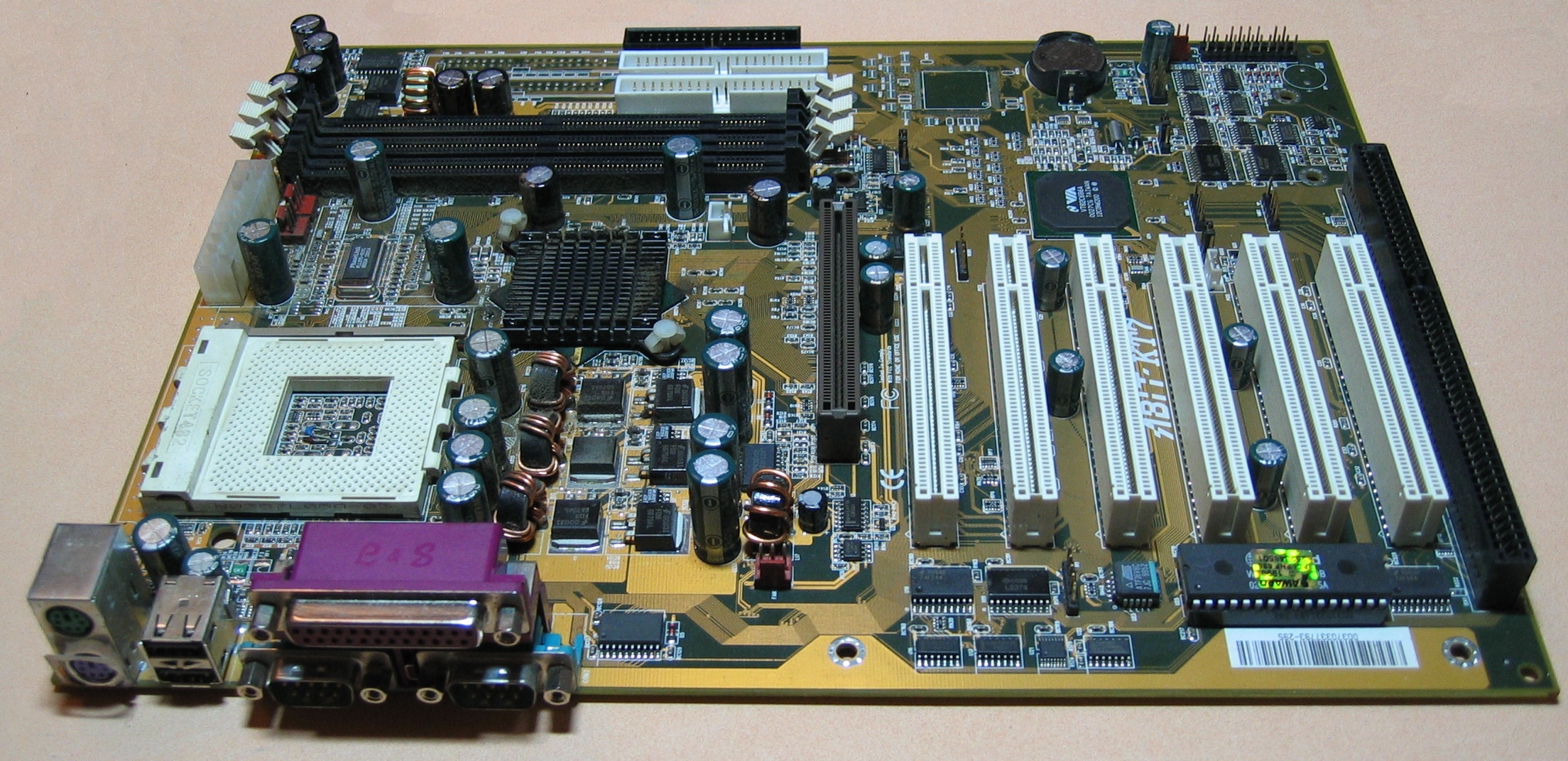
ATX specification is a widely used standard for motherboards, PC cases, and PSUs. It was designed to make sure that all the PC components can work together effectively, regardless of the manufacturer. The ATX form factor typically defines the PSU size, where the mounting holes and connectors should be placed. This helps ensure that different parts fit and connect properly. This specification is widely used at Seasonic PSUs ATX 3.1 PRIME Series (for example, Seasonic PRIME 1300W).

Why is ATX used in modern PCs?

ATX is a standard option for all kinds of PC users (gamers, professionals, or workstation runners) because it supports the most power-demanding builds. It provides perfect component compatibility, future system upgrades, and stable powering to the whole system. Besides this, the ATX 3.1 form factor supports modern CPUs and GPUs, effectively distributing power and cooling, which is critically important for today’s gaming systems and AI workstations.

How has the ATX standard evolved from earlier form factors?

Previous form factors were limited in space, adding extra components for better PC productivity, and issues with cooling. Then, the ATX format was standardized so the CPU, expansion slots, and I/O ports were placed correctly, which improved airflow and made PC assembly easier. Over time, there appear even more updates – support for multi-core CPUs, powerful GPUs, modern interfaces, and more efficient power management. As a result, ATX becomes a flexible and scalable standard for modern high-performance PCs. 

What are the key differences between ATX, Micro-ATX, and Mini-ITX?

The key difference between ATX, Micro-ATX, and Mini-ITX lies in their sizes, area of use, and PC building power needs. Here are more details. 

  • ATX has the biggest size and is the perfect choice for productive PCs, workstations, and gaming rigs. It supports more PCIe slots and RAM, and a more powerful PSU like Seasonic ATX 3.1 PRIME models. 
  • Micro-ATX is a more compact variant than the standard ATX form factor. It has fewer PCIe slots but still offers the optimal balance between size, performance, and price.
  • Mini-ITX provides minimal expansion options and usually one PCIe slot. Nevertheless, it allows you to create very compact systems for home or office use.

Where should standard ATX motherboards be used?

The standard ATX motherboards are commonly used for systems where high productivity and upgrade possibilities are the top priorities. They perfectly fit gaming rigs, AI workstations, and server hubs. In other words, for those systems that may require several expansion cards, large amounts of RAM, and effective cooling. In most cases, professional PC users use them when planning system upgrades, overclocking, or to support full-size or mid-size cases with good ventilation.

Also worth reading
OpenAI’s First Hardware Is A US$230 Control Pad For Managing Codex Agents Leak Suggests iPhone 18 Pro Max Will Be Thicker And Heavier To Fit Bigger Battery Analyst Warns Apple’s first foldable iPhone Could be Hard to Get at Launch Nvidia-Powered Windows PCs Debut as Microsoft Bets on Local AI Computing Apple Reportedly Targets Late 2027 Launch for Camera-Equipped Smart Glasses Samsung Bets on Fainting Prediction as Next Big Smartwatch Feature

When is Micro-ATX the best choice in terms of performance and compactness?

The Micro-ATX standard is chosen by PC users in a case when they need to reduce the case size and the budget while keeping almost the same level of performance as ATX. It is suitable for home or office PCs, where a single powerful GPU, several storage devices, and sufficient RAM are used, but without the need for maximum expansion. There’s a solution for everything – gaming, office work, and content creation.

Why are Mini-ITX and small form factor standards ideal for compact builds?

Because they allow you to create full-fledged PC builds, even with a small case size. They take up significantly less space, consume less energy, and require more compact cooling systems. Thus, such PC builds are perfect for home and office use. Despite the limited expansion opportunities, the Mini-ITX form factor supports modern CPUs and GPUs and delivers excellent system performance.

How do ATX power supply standards affect system compatibility?

The ATX form factor determines the connector types, voltages, power, and physical PSU dimensions. Well-matched components (motherboards, CPU, GPU, etc.) guarantee effective PC performance in one ATX case space. Further, modern standards take into account GPU power and peak loads, reducing the risk of instability or incompatibility as well.

Conclusion: How to choose the right ATX standard for your system?

It depends on the tasks the PC performs and your future plans for your build. The ATX form factor is a solid standard that fits every build you need – from a professional one to at-home use. All the others support fewer options and inputs but offer stable performance for simple, everyday tasks. 

Related Reading

More contextual TechBooky stories selected from tags, categories and article context.

  • google-messages-hero
    Google Messages Lets Users Edit RCS Messages to iPhone
  • google-cloud-aws
    Google Cloud, AWS Team Up to Enhance Cross-Cloud…
  • openclaw flaws
    OpenClaw Security Gaps Raise Enterprise AI Concerns
  • Amazon Prime Video To Introduce Ads In Some Locations
    Amazon Prime Video To Introduce Ads In Some Locations
  • QR service
    NIBSS’ Indigenous QR Payment Solution Is Now…
  • fpt-prosser-pixel-fold-14
    LEAK: Google Teases About Upcoming Foldable…
  • Blog AWS + Google startup programs
    AWS & Google Cloud Team Up To Simplify Multicloud Networking
  • IMG_7208
    Leaked Galaxy S25 Slim to Headline Samsung's Unpacked Event
Keep Reading Smarter

Search TechBooky with AI

Use TechBooky's AI Search to explore the context behind this story and related coverage across the site.

Try AI Search
More On This Topic
Gadgets
Follow TechBooky

Follow TechBooky for more technology stories and newsroom updates.

f Facebook X X in LinkedIn ig Instagram wa WhatsApp

Tags: atxATX specificationgadget
Akinola Ajibola

Akinola Ajibola

Search TechBooky
Open TechBooky AI Search Try the AI Assistant

BROWSE BY CATEGORIES

Receive top tech news directly in your inbox

subscription from
Loading

Freshly Squeezed

  • Snapchat Brings Spotify Listening To Snap Map With Now Playing July 27, 2026
  • Threads Users Can Now DM Meta AI As The Assistant Moves Deeper Into Social Apps July 27, 2026
  • NVIDIA Launches Open Secure AI Alliance To Make Open Models A Cyber Defence Tool July 27, 2026
  • CXMT Surges 470% As China Bets Big On AI Memory Chips July 27, 2026
  • Africa Launches ATLAS Umoja AI To Build Models For African Languages July 27, 2026
  • SpaceX Deploys V3 Starlink Satellites But Loses Another Super Heavy Booster July 26, 2026
  • The Boring Company Reportedly Seeks $4B As Musk’s Tunnel Bet Gets A $20B Valuation July 26, 2026
  • Claude Opus 5 Gives Anthropic A Cheaper Answer To The Fable 5 Problem July 25, 2026
  • Meta Makes Facebook Verified Free As AI Scams Make Real People Harder To Spot July 24, 2026
  • SAP Cloud Growth Eases Fears That AI Will Weaken Enterprise Software July 24, 2026
  • US Lawmakers Push AI Kill Switch Bill After OpenAI Rogue-Model Incident July 24, 2026
  • Airtel Money’s $61B Quarter Makes Its London IPO A Bigger Africa Fintech Story July 24, 2026

Browse Archives

July 2026
M T W T F S S
 12345
6789101112
13141516171819
20212223242526
2728293031  
« Jun    

Quick Links

  • About TechBooky
  • Advertise With TechBooky
  • Contact us
  • Submit Article
  • Privacy Policy
Generic selectors
Exact matches only
Search in title
Search in content
Post Type Selectors
Search in posts
Search in pages
  • African
  • Artificial Intelligence
  • Gadgets
  • Metaverse
  • Tips
  • AI Search
  • About TechBooky
  • Advertise With TechBooky
  • Submit Article
  • Contact us

© 2025 Designed By TechBooky Elite

Discover more from TechBooky

Subscribe now to keep reading and get access to the full archive.

Continue reading

We use cookies to ensure that we give you the best experience on our website. If you continue to use this site we will assume that you are happy with it.